
When you or your loved one is diagnosed with kidney failure, the journey toward dialysis begins with one critical step — the placement of a Central Venous Catheter. This device is often the first lifeline for patients needing urgent dialysis, making it a vital part of the treatment process.
Let’s explore what a CVC is, how it helps, and why choosing the right expert like Dr. Achintya Sharma can make all the difference.
What Is a Central Venous Catheter?
A CVC is a flexible, narrow tube inserted into a major vein, typically located in the neck, chest, or groin area. This catheter allows direct access to your bloodstream, which is essential for hemodialysis — a process that filters waste and excess fluids from your blood when your kidneys no longer function adequately.
Unlike regular IV lines, a Central Venous Catheter can handle higher volumes of blood, making it suitable for rapid and efficient dialysis treatments. It also plays a key role before a permanent solution, like an AV fistula surgery, can be planned and performed.
Why Is a Central Venous Catheter Important?
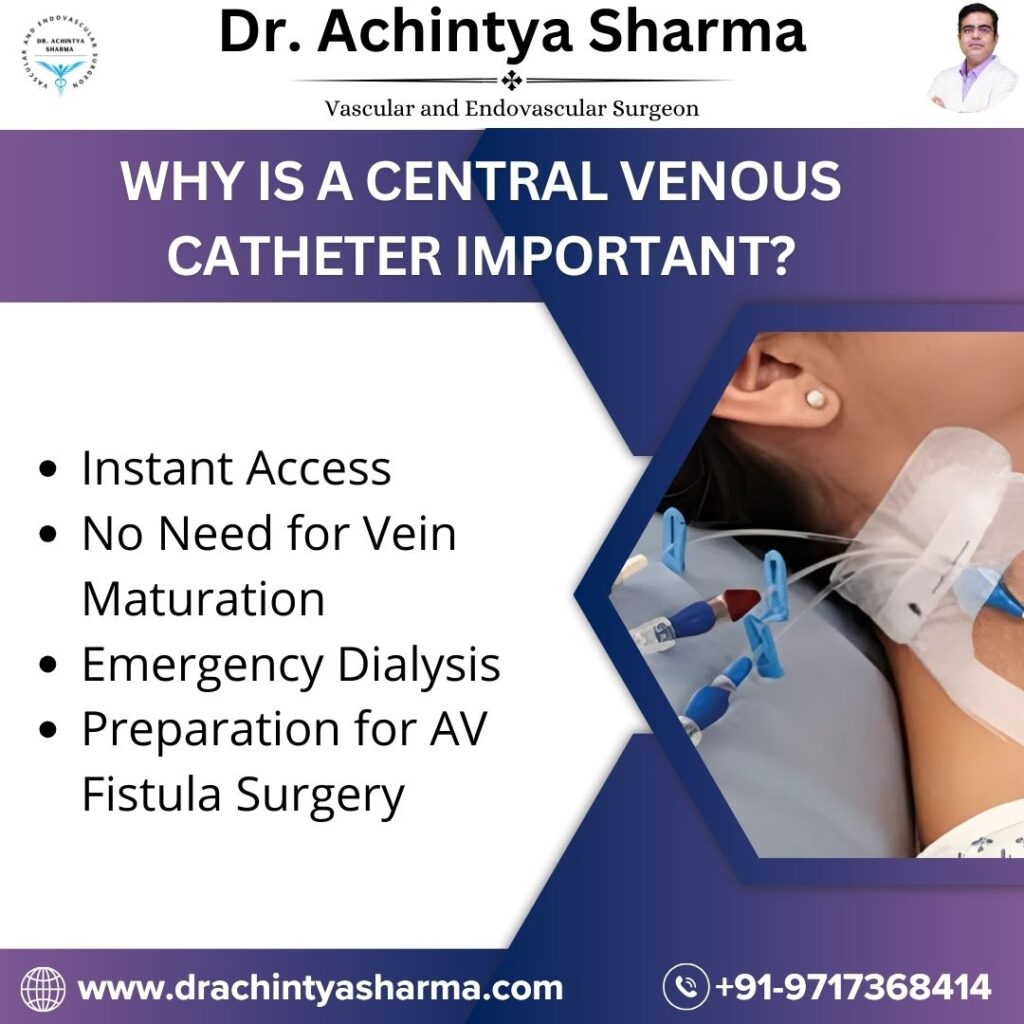
The journey from diagnosis to long-term dialysis involves several stages. The Central Venous Catheter serves as a crucial bridge in the early stages, providing access for immediate dialysis while the AV fistula — a more permanent solution — takes time to mature.
Here’s why the CVC is indispensable:
- Instant Access: The catheter can be utilized right after it is placed.
- No Need for Vein Maturation: Unlike an AV fistula, which needs weeks to mature, a CVC provides instant access.
- Emergency Dialysis: It is ideal for patients who require urgent or emergency dialysis.
- Preparation for AV Fistula Surgery: It gives the healthcare team time to prepare for the more sustainable and safer AV fistula surgery.
Why Expert Hands Matter in CVC Placement
Expertise matters when it comes to placing a Central Venous Catheter. Dr. Achintya Sharma, a renowned vascular access and dialysis specialist, has years of experience in performing these procedures with precision and care.
With Dr. Achintya Sharma, patients receive:
- Minimally Invasive Procedures
- Reduced Risk of Infections
- Guidance on Transition to AV Fistula
- Comprehensive Post-Insertion Care
His patient-centric approach ensures not only a smooth procedure but also ongoing support for the next steps in your dialysis journey.
What to Expect During and After Placement
Doctors usually perform the placement of a Central Venous Catheter in a sterile environment using local anesthesia. They typically complete the procedure in less than an hour.
Post-procedure care includes:
- Keeping the site clean and dry
- Avoiding heavy lifting or strenuous activities
- Keep an eye out for possible infection symptoms such as irritation, swelling, or unusual redness around the catheter site.
- Following up regularly with your nephrologist or dialysis specialist
Transitioning from a Central Venous Catheter to a long-term solution like an AV fistula is part of a well-planned treatment pathway, often supervised by experts like Dr. Achintya Sharma.
Conclusion-
Starting dialysis can feel overwhelming, but the Central Venous Catheter simplifies the process, giving patients time and stability while preparing for a more permanent solution. It’s not just a tube — it’s your first step toward safer, more effective dialysis and AV fistula surgery.
Trusting professionals like Dr. Achintya Sharma ensures you receive top-tier care from the start, minimizing risks and maximizing outcomes.