
How Blood Flow Affects Your Heart, and Overall Wellness is a topic that matters to everyone, no matter your age or lifestyle. You decide how well your heart works, how much energy you have, and how healthy your organs stay. When circulation is smooth, your body performs at its best. But when blood flow slows down, your heart becomes stressed, your cells receive less oxygen, and your overall wellness begins to decline. In this guide, you’ll learn how blood flow shapes your health, the dangers of poor circulation, and simple ways to protect your heart with insights from Dr. Achintya Sharma.
Why Blood Flow Matters More Than You Think
This is the lifeline of your body. Every beat of your heart pushes oxygen-rich blood through a network of arteries that feed your brain, muscles, skin, and vital organs. When this flow is healthy, you feel energetic, think clearly, and move freely.
But when circulation slows, everything suffers—your heart works harder, your tissues get weaker, and your risk of disease rises. Understanding How Blood Flow Affects Your Heart and Overall Wellness helps you protect your long-term health and prevent silent vascular damage before it becomes serious.
How Poor Blood Flow Hurts Your Heart
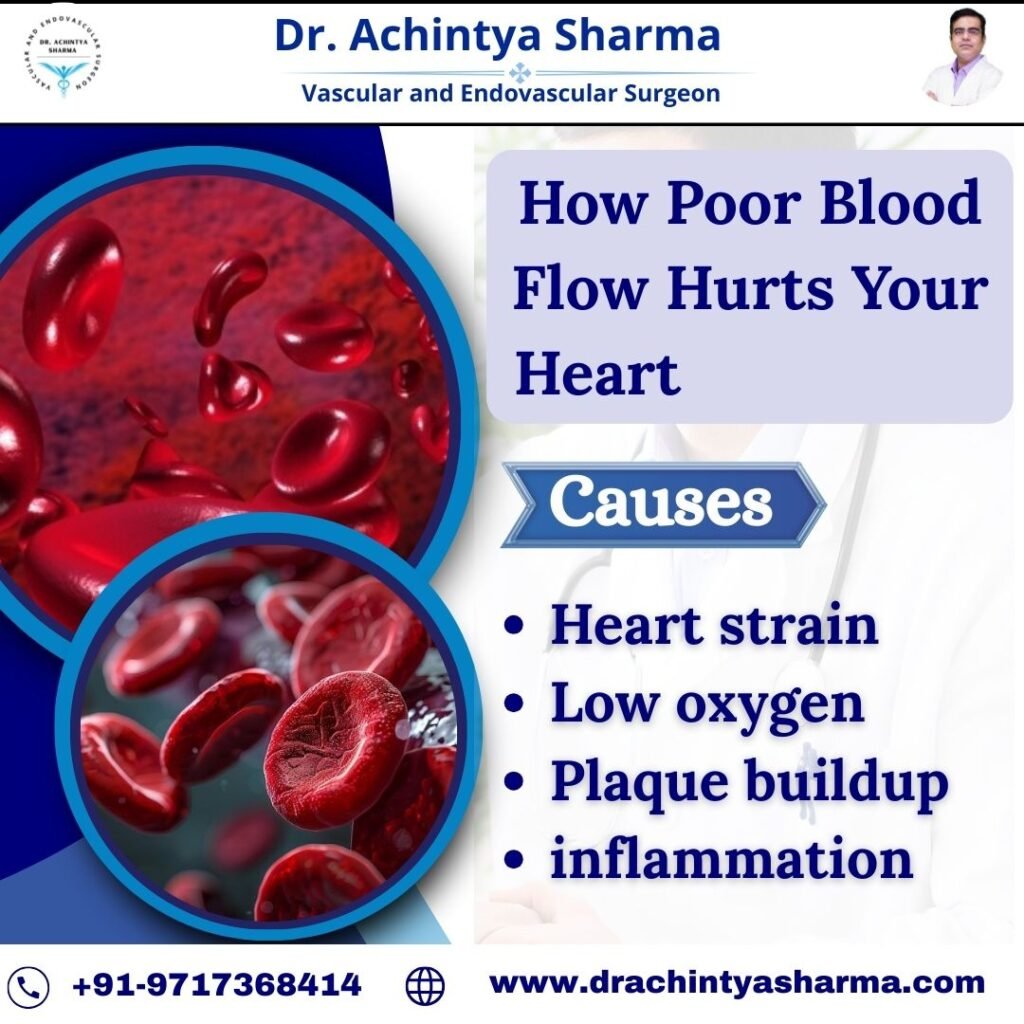
1. Your Heart Works Harder
If arteries narrow or stiffen, the heart must pump with more force. Over time, this leads to high blood pressure and heart strain.
2. Oxygen Delivery Drops
Low circulation starves your cells of oxygen. This causes fatigue, slow healing, leg pain while walking, and brain fog.
3. Plaque Begins to Build Up
Poor blood flow encourages the buildup of fatty deposits inside your arteries. This is the starting point of heart attacks, strokes, and vascular disease.
4. Inflammation Rises
Low or sluggish How blood flow triggers internal inflammation, weakening your artery walls and making them prone to damage.
5. Organ Function Declines
Your kidneys, brain, and muscles depend on steady circulation. Any disruption affects your overall performance and wellness.
Benefits of Improving
Boosting circulation is the simplest way to support long-term heart health. According to Dr. Achintya Sharma, even small lifestyle changes can dramatically improve your vascular wellness.
Better Energy Levels
Healthy circulation delivers fresh oxygen throughout the body, helping you feel active and focused.
Stronger Heart Health
This reduces strain on the heart and lowers your risk of heart disease.
Improved Brain Function
More oxygen means sharper memory, better concentration, and improved mood.
Healthy Skin and Faster Healing
How Blood Flow supports tissue repair, giving you healthier skin and quicker recovery.
Reduced Risk of Vascular Problems
Good circulation prevents plaque buildup, artery narrowing, and blockages.
How to Improve Your Blood Flow Starting Today
1. Move Every Day
Even a 20-minute walk boosts circulation and keeps arteries flexible.
2. Drink Plenty of Water
Hydration keeps your blood thin and flowing smoothly.
3. Eat Heart-Healthy Foods
Choose leafy greens, berries, fish, nuts, olive oil, and whole grains.
4. Quit Smoking
Smoking is one of the fastest ways to clog and harden arteries.
5. Maintain Healthy Blood Sugar
High sugar damages blood vessels. Monitor and manage your glucose consistently.
6. Get Regular Check-ups
Routine vascular evaluations from specialists like Dr. Achintya Sharma help detect circulation problems early.
Conclusion
Understanding How Blood Flow Affects Your Heart and Overall Wellness is the first step toward protecting your long-term health. Good circulation keeps your organs strong, your heart efficient, and your energy levels high. Poor blood flow, however, silently damages your arteries and increases your risk of heart disease, stroke, and chronic fatigue. The good news is that improving your circulation is easy when you follow simple, consistent habits. With guidance from experts like Dr. Achintya Sharma, you can maintain strong blood vessels, a healthy heart, and a better quality of life. Start today—your heart depends on it.
(FAQ)
1. What are the signs of poor blood flow?
Cold feet, leg pain, fatigue, numbness, slow healing, and swelling.
2. How does blood flow affect heart health?
Good blood flow reduces heart strain, keeps arteries clear, and prevents heart disease.
3. Can poor circulation be reversed?
Yes. Lifestyle changes, medical care, and early detection can significantly improve it.
4. When should I see a vascular specialist?
If you experience persistent leg pain, swelling, numbness, or slow healing, consult a specialist like Dr Achintya Sharma.