Winter feels peaceful — soft sweaters, warm rooms, and calm evenings. But deep inside your body, something else may be happening. Cold temperatures can silently affect your circulation and make vascular malformations more noticeable and painful. These abnormal connections between veins and arteries can react strongly to winter changes. Many people ignore early symptoms like numbness, swelling, or sudden color changes in the skin. But these warning signs shouldn’t be overlooked. According to Dr Achintya Sharma, winter can worsen underlying vein and artery problems. In this blog, you’ll understand how winter affects vascular health and how early care protects your veins.
Winter Puts Extra Pressure on Your Veins
During winter, your body conserves heat by tightening blood vessels. This means your veins and arteries become narrower. For someone who already has vascular malformations, this narrowing can create pressure, discomfort, and even pain.
Many people first notice symptoms when the weather turns cold — heavy legs, bluish skin, swelling, or throbbing pain. These symptoms often get ignored or assumed to be “normal winter issues.” But winter can reveal hidden circulation problems.
Early identification matters. A small change in color, sudden cold patches, or unusual pain might indicate a deeper issue that needs attention from specialists like Dr Achintya Sharma.
How Winter Makes Vascular Malformations Worse
Vascular malformations are abnormal blood vessel networks that don’t function normally. Cold temperatures make these malformations react in several ways:
1. Reduced Circulation
Cold weather slows down blood flow. When blood moves slowly, pressure builds inside malformed vessels, making symptoms worse.
2. Skin Discoloration
You may notice blue, red, or purple patches. These changes happen because malformed vessels cannot adjust to temperature drops.
3. Pain and Numbness
Winter triggers spasms in blood vessels. This creates pain, tingling, or complete numbness in the affected area.
4. Swelling
Pooling of blood becomes more common in cold weather, leading to swelling around the malformation.
5. Delayed Healing
If you have cuts or bruises near a malformation, they may take longer to heal in winter due to reduced circulation.
Dr Achintya Sharma explains that winter does not create vascular malformations, but it can worsen symptoms and reveal issues that were previously unnoticed.
How to Protect Yourself in Winter
Here are practical and simple steps to keep vascular malformations under control even during cold months:
1. Keep the Affected Area Warm
Wear gloves, socks, or warm clothing. Heat improves circulation and reduces pain.
2. Stay Active Indoors
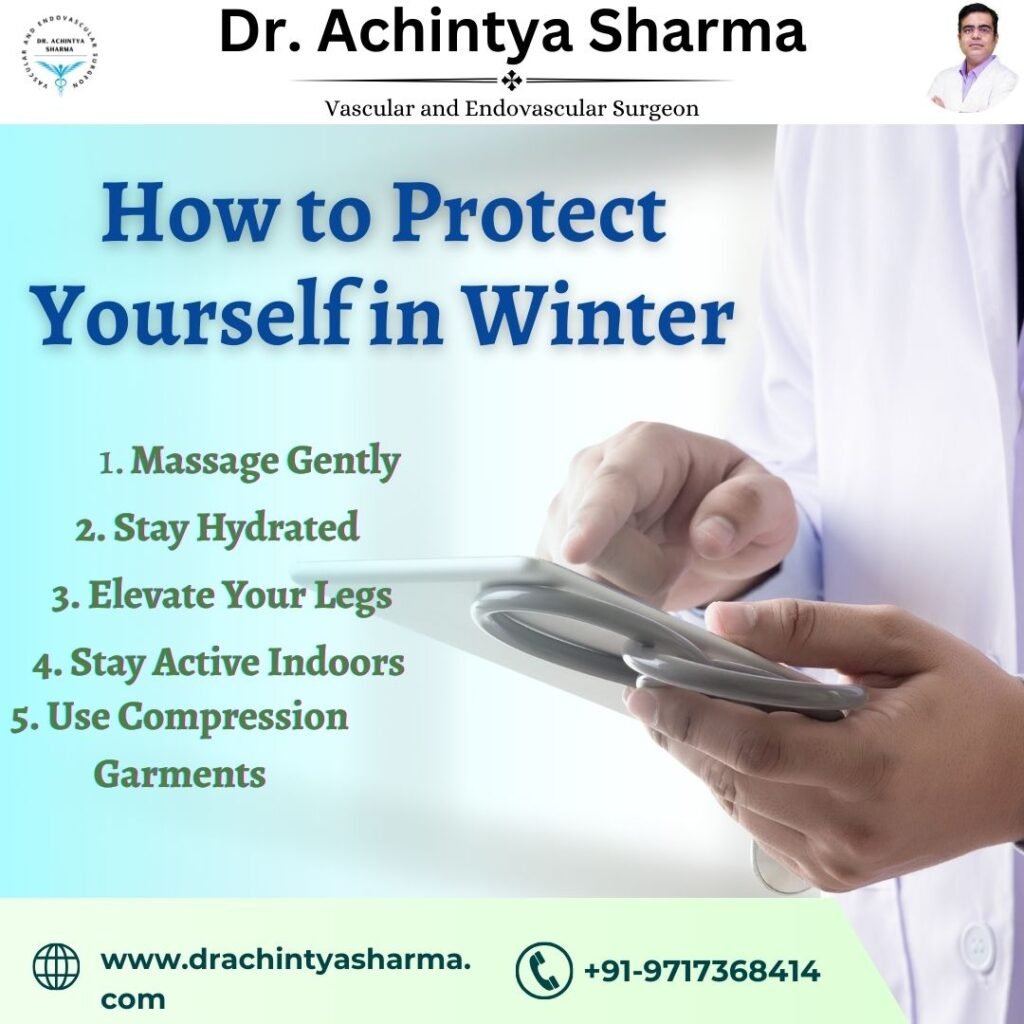
Light exercises, stretching, and walking improve blood flow. Avoid long periods of sitting or standing.
3. Massage Gently
Gentle massages promote the movement of blood in the affected area. But avoid deep pressure.
4. Stay Hydrated
People drink less water in winter, causing thicker blood flow. Drinking water helps maintain smooth circulation.
5. Use Compression Garments
For leg or arm malformations, compression stockings or sleeves help reduce swelling.
6. Elevate Your Legs
If the malformation is in the legs, elevate them for 10–15 minutes daily to reduce pressure.
7. Book a Winter Vein Checkup
Winter is the best time to monitor changes in vascular malformations. A consultation with experts like Dr Achintya Sharma helps detect complications early.
Take Winter Symptoms Seriously
Protecting your circulation in winter is essential, especially if you notice signs of vascular malformations. Don’t ignore unusual swelling, discoloration, tingling, or cold patches. These symptoms often indicate deeper issues.
Start simple: keep yourself warm, stay active, monitor your skin, and avoid sudden exposure to extreme cold. If symptoms increase, book a medical evaluation quickly. Specialists like Dr Achintya Sharma can perform diagnostic tests and guide you on the safest treatment plan. Early care prevents long-term damage and keeps your vascular health strong through winter and beyond.
FAQs
1. What are vascular malformations?
They are abnormal connections between veins, arteries, or capillaries that disrupt normal blood flow.
2. Do vascular malformations get worse in winter?
Yes. Cold weather slows blood circulation and increases pressure, making symptoms more noticeable.
3. What symptoms should I watch for in winter?
Look for sudden swelling, bluish skin, numbness, or pain in cold areas.
4. Can vascular malformations be treated?
Treatments may include medications, laser therapy, or minimally invasive procedures, depending on severity.
5. When should I see a doctor?
If symptoms change suddenly or become painful, visit a vascular specialist, such as Dr. Achintya Sharma.
Conclusion
Winter can expose hidden circulation issues, especially in people with vascular malformations. The cold weather slows blood flow, increases swelling, and causes discomfort in affected areas. But early care and simple daily habits can protect your vascular health. Stay warm, move regularly, and notice any unusual skin changes or pain. These signs might indicate deeper problems that require medical guidance. As Dr Achintya Sharma advises, timely consultation prevents complications and keeps your veins healthy throughout winter. Listen to your body. If something feels unusual, take action early and safeguard your vascular health this season.