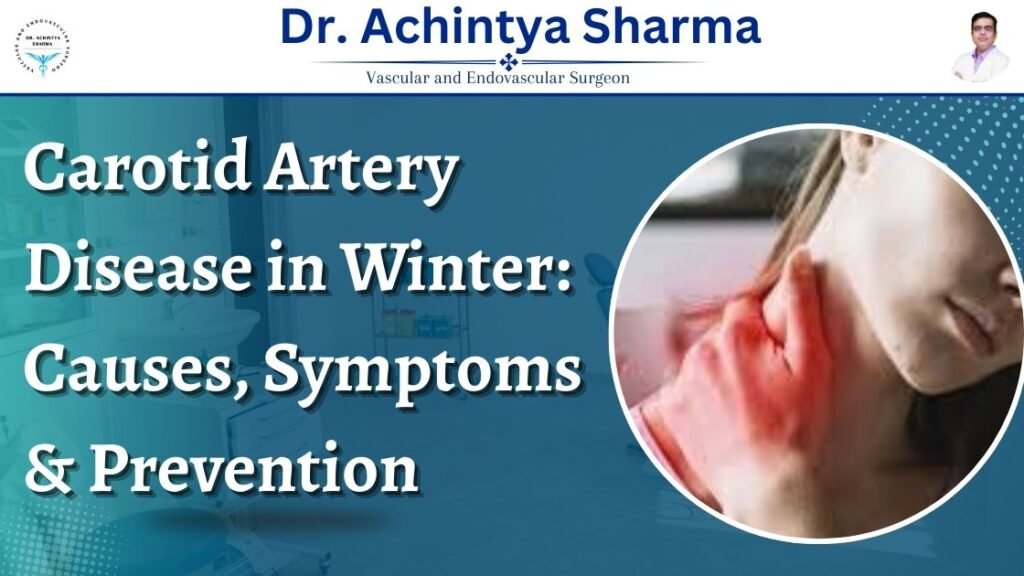
Winter may feel refreshing, but for many people, it brings hidden risks, especially for those suffering from Carotid Artery Disease. Cold temperatures can thicken the blood, tighten arteries, and increase the chances of reduced blood flow to the brain. These changes make winter a sensitive season for individuals with existing plaque or narrowing in the carotid arteries. Even mild symptoms can become more noticeable in cold weather. According to Dr Achintya Sharma, early awareness and timely precautions can help prevent serious complications like stroke. In this blog, you’ll learn how winter affects carotid health and simple ways to stay safe and protected.
Why Winter Affects Carotid Artery Disease
When temperatures drop, your body tries to preserve heat. To do this, blood vessels narrow, blood pressure increases, and circulation becomes slower. For a healthy person, this is manageable. But for someone with Carotid Artery Disease, it can be dangerous.
The carotid arteries are the main blood vessels that carry oxygen-rich blood to the brain. If they narrow due to plaque buildup, even a minor change in blood flow can lead to symptoms. Winter increases the risk of:
- Blood thickening
- Higher blood pressure
- Reduced oxygen flow
- Inflammation around artery blockages
Together, these factors increase the risk of mini-strokes and strokes.
As Dr Achintya Sharma explains, understanding these seasonal changes is the first step in protecting your brain health.
How Cold Weather Impacts Circulation
Cold weather affects your body in multiple ways. Your blood becomes slightly thicker, especially if you drink less water in winter. Dehydration is common during cold months because people tend to feel less thirsty. Thick blood moves slowly through narrowed arteries.
The body also releases stress hormones like adrenaline in response to cold. These hormones can raise heart rate and blood pressure, putting more strain on the carotid arteries. If plaque is already present, pressure changes may cause small parts of it to break off, blocking blood supply to the brain.
Common winter-related symptoms of Carotid Artery Disease include:
- Frequent headaches
- Sudden dizziness
- Neck discomfort
- Blurred vision
- Weakness or numbness
- Trouble concentrating
These symptoms often seem harmless, but they may signal reduced blood flow. Dr Achintya Sharma advises that noticing these symptoms early can prevent serious complications later.
How to Protect Yourself in Winter

Even if you have Carotid Artery Disease, you can reduce winter risks by adopting simple daily habits. These lifestyle changes help maintain healthy blood flow and reduce strain on your arteries.
1. Stay Warm
Cold temperatures tighten arteries. Wear scarves, warm clothing, and layers to protect your neck and maintain smooth circulation.
2. Drink More Water
Hydration prevents blood from becoming thick. Sip warm water throughout the day to maintain good blood viscosity.
3. Move Your Body
Winter reduces physical activity, but even indoor movement helps keep your circulation active. Light walking, stretching, or yoga works well.
4. Eat Heart-Healthy Foods
Consume foods rich in omega-3, vitamin E, leafy greens, fruits, and nuts. Avoid heavy, oily meals that increase cholesterol and worsen plaque buildup.
5. Monitor Your Blood Pressure
Check your blood pressure frequently. Winter fluctuations can surprise you. Keeping it in control reduces stress on your carotid arteries.
6. Avoid Sudden Temperature Changes
Don’t step out from a warm room into very cold air immediately. Sudden exposure can sharply increase blood pressure.
Take Charge of Your Carotid Health
You can lower winter risks by staying alert and making small changes. Wear warm clothes, stay hydrated, and monitor your symptoms. If you notice sudden weakness, speech problems, numbness, or severe dizziness, treat it as an emergency. These may be warning signs of a stroke.
Protecting yourself from carotid artery disease in winter is essential for long-term health. Consult an expert like for guidance, regular screenings, and advanced treatments. Winter can be safe if you understand your condition and take timely action.
FAQs
1. Why does Carotid Artery Disease worsen in winter?
Cold weather thickens the blood and narrows the arteries, making it harder for blood to reach the brain.
2. Can dehydration increase Carotid Artery Disease risks in winter?
Yes. Dehydration makes blood thicker, increasing stress on already-narrowed carotid arteries.
3. What are the early signs of Carotid Artery Disease blockage?
Dizziness, headaches, blurred vision, neck pressure, weakness, and trouble speaking.
4. How can I improve blood flow to the brain in winter?
Stay warm, drink enough water, eat healthy foods, and stay physically active.
5. When should I consult a vascular specialist?
If you notice sudden numbness, confusion, vision issues, or difficulty speaking, visit a specialist like Dr Achintya Sharma immediately.
Conclusion
Winter can silently worsen Carotid Artery Disease by thickening blood, raising blood pressure, and slowing circulation to the brain. However, you can stay protected with simple daily habits—staying warm, drinking enough water, eating healthy foods, and staying active. Don’t ignore symptoms like dizziness or headaches, as they may signal reduced blood flow. Regular checkups and early diagnosis help prevent complications such as stroke. As Dr Achintya Sharma advises, prevention is the most powerful tool for maintaining carotid health. This winter, prioritise your vascular health and take steps that protect your brain and overall well-being.