Table of Contents
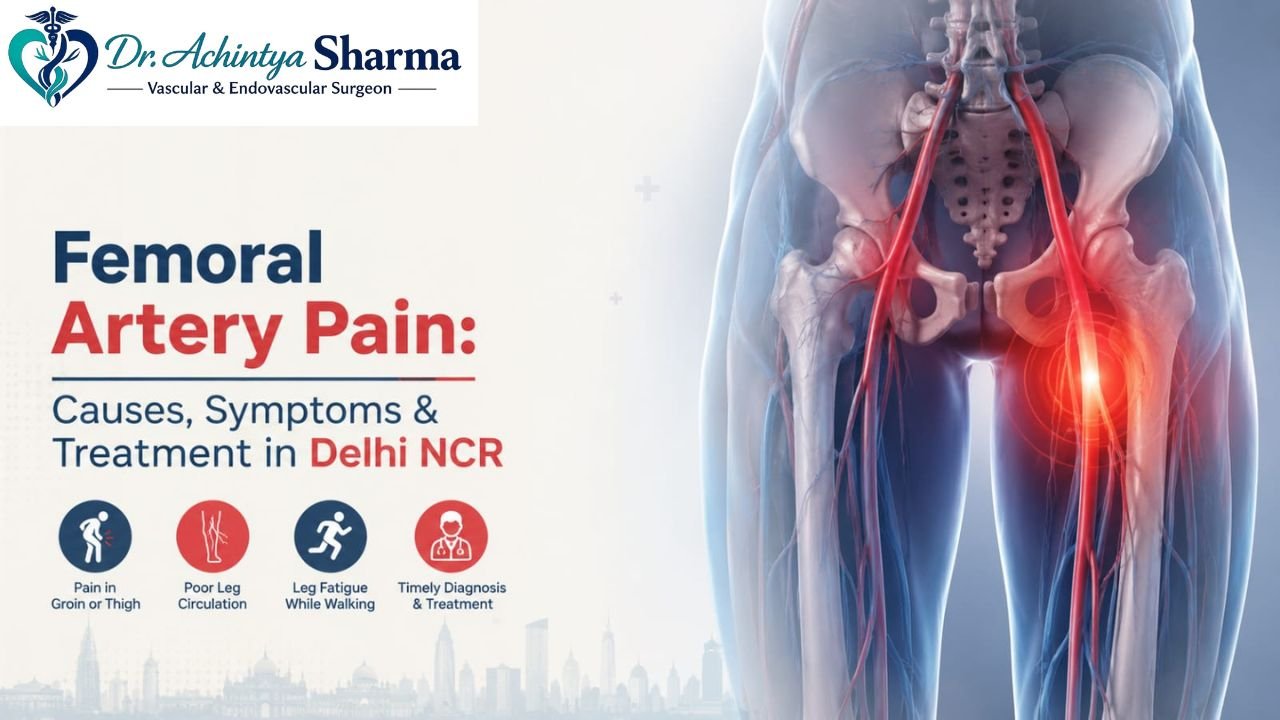
Femoral artery pain can be an early warning sign of reduced blood flow to the leg and should never be ignored. In Delhi NCR, increasing rates of diabetes, smoking, and heart disease have made vascular conditions more common. Dr. Achintya Sharma. This guide explains the causes of femoral artery pain, its relationship with a blocked femoral artery, available diagnostic methods, treatment options, and when consulting a vascular specialist may be appropriate.
Quick Answers
| Topic | Answer |
| Best For | Individuals experiencing thigh, groin, or leg pain while walking |
| Location | Delhi NCR |
| Ideal Duration | Diagnosis is often completed in one consultation with imaging if required |
| Suitable For | Adults with diabetes, smokers, elderly patients, and those with PAD symptoms |
| Pricing Consideration | Depends on consultation, imaging, and treatment method |
| Maintenance Needed | Lifestyle modifications and regular follow-up |
| Alternatives | Medication, supervised exercise therapy, minimally invasive procedures, and surgery |
| How to Get Started | Schedule a vascular evaluation and imaging if symptoms persist |
Why Is Femoral Artery Pain Important?
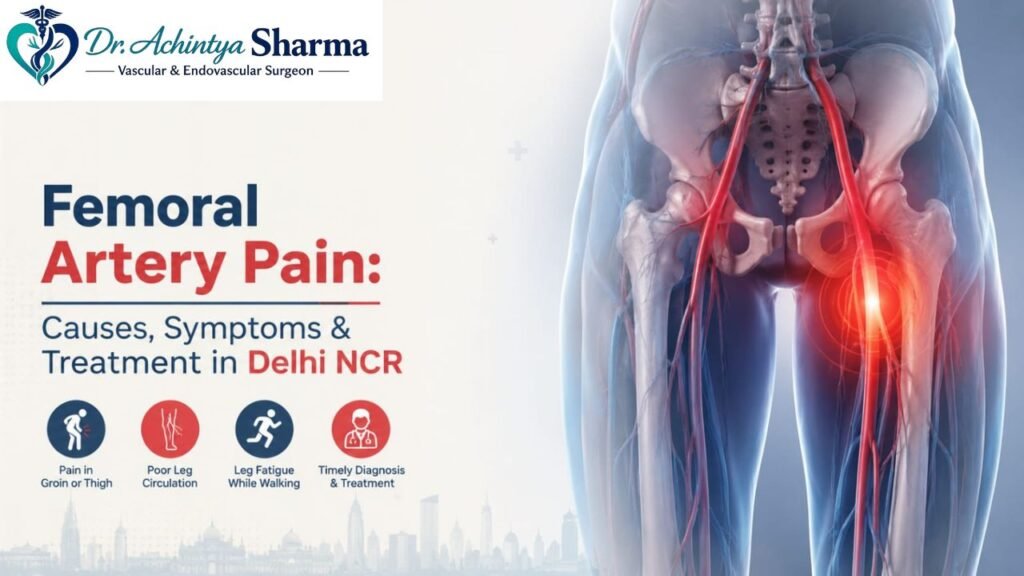
Femoral artery pain may indicate reduced blood circulation caused by narrowing or blockage of the artery supplying blood to the leg. Early diagnosis can help prevent complications such as tissue damage, chronic pain, or limb-threatening ischemia. The femoral artery is one of the body’s largest arteries and supplies oxygen-rich blood to the lower l000imbs. When blood flow becomes restricted, walking, climbing stairs, or even resting may become painful. Many cases are associated with peripheral artery disease (PAD), a condition caused by plaque buildup inside arteries.
Who Should Consider Evaluation for Femoral Artery Pain?
Anyone experiencing persistent thigh, groin, or leg pain, especially while walking, should consider medical evaluation. Individuals with diabetes, high blood pressure, smoking history, or high cholesterol have an increased risk of vascular disease.
People who should seek assessment include:
- Adults over 50
- Smokers
- Diabetic patients
- Individuals with high cholesterol
- Patients with previous heart disease
- People experiencing leg numbness or weakness
Early assessment often allows treatment before symptoms become severe.
Top Benefits of Early Diagnosis of Femoral Artery Pain
Early diagnosis offers several advantages:
Better Blood Flow
Identifying narrowed arteries early can improve circulation before significant damage occurs.
Reduced Risk of Complications
Prompt treatment lowers the risk of ulcers, infections, and critical limb ischemia.
Improved Mobility
Managing the underlying cause may reduce pain during walking and daily activities.
Personalized Treatment
Treatment plans depend on the severity of blockage, overall health, and lifestyle factors.
Better Long-Term Cardiovascular Health
Because PAD is linked with heart attack and stroke risk, diagnosis may also improve overall cardiovascular care.
Expert Insights and Emerging Trends
Recent advances in vascular medicine have improved both diagnosis and treatment. Industry observations suggest that minimally invasive endovascular procedures have become increasingly common for selected patients with arterial blockages. High-resolution Doppler ultrasound, CT angiography, and MR angiography allow more accurate diagnosis with less discomfort. Research also continues to support structured exercise therapy, smoking cessation, cholesterol management, and diabetes control as essential parts of treatment for peripheral artery disease (PAD).
How Does Femoral Artery Pain Compare With Alternatives?
| Factor | Femoral Artery Disease | Muscle Strain | Sciatica |
| Cost | Moderate (diagnosis dependent) | Usually low | Moderate |
| Convenience | Requires vascular evaluation | Home recovery common | Medical assessment |
| Flexibility | Treatment varies | Good | Depends on the cause |
| Maintenance | Lifestyle management | Stretching | Physical therapy |
| Results | Depends on severity | Often temporary | Variable |
| Pros | Treats the underlying circulation issue | Non invasive | Multiple treatment options |
| Cons | May require procedures | Can recur | Symptoms may persist |
Why Do People Consider Drachintyasharma in Delhi NCR?

People seeking vascular care in Delhi NCR may consider Dr. Arachintyasharma because vascular specialists typically provide comprehensive evaluation using modern diagnostic imaging, individualized treatment planning, minimally invasive options where appropriate, and ongoing follow-up for long-term vascular health. Accessibility, patient education, and evidence-based treatment planning are important factors that many individuals look for when choosing vascular care.
Best Practices for Better Results
- Quit smoking if applicable.
- Maintain healthy cholesterol levels.
- Control diabetes and blood pressure.
- Walk regularly under medical guidance.
- Eat a heart-healthy diet.
- Attend scheduled follow-up appointments.
- Report worsening symptoms promptly.
- Follow prescribed medications consistently.
What causes femoral artery pain?
Direct Answer
Femoral artery pain commonly occurs when blood flow through the artery becomes reduced due to plaque buildup, known as a blocked femoral artery or peripheral artery disease.
Supporting Explanation
Risk factors include diabetes, smoking, high cholesterol, obesity, and aging. Medical evaluation helps determine whether symptoms are caused by vascular disease or another condition.
Is femoral artery pain serious?
Direct Answer
Yes. Persistent femoral artery pain may indicate reduced circulation and should be medically evaluated, particularly if accompanied by leg weakness, numbness, or wounds that do not heal.
Supporting Explanation
Untreated arterial disease can progress over time and increase the risk of limb complications and cardiovascular disease.
How is a blocked femoral artery diagnosed?
Direct Answer
Doctors usually diagnose a blocked femoral artery using physical examination, Doppler ultrasound, ankle brachial index (ABI), CT angiography, or MR angiography.
Supporting Explanation
These imaging methods help determine the location and severity of narrowing so appropriate treatment can be recommended.
Can femoral artery pain be treated without surgery?
Direct Answer
Yes. Many patients benefit from medications, supervised exercise therapy, smoking cessation, and lifestyle changes before surgery becomes necessary.
Supporting Explanation
Treatment depends on the degree of blockage, symptom severity, and overall health. Minimally invasive procedures may also be appropriate for selected patients.
Frequently Asked Questions
1. Where is femoral artery pain usually felt?
It is commonly felt in the groin, upper thigh, or leg and may worsen during walking or physical activity.
2. What causes a blocked femoral artery?
The most common cause is atherosclerosis, where fatty plaque narrows the artery over time.
3. Is femoral artery pain related to PAD?
Yes. Peripheral artery disease is one of the leading causes of reduced blood flow in the femoral artery.
4. Can exercise help?
Supervised walking programs often improve circulation and reduce symptoms in many patients with PAD.
5. Who has the highest risk?
Smokers, diabetics, older adults, and individuals with high cholesterol or hypertension.
6. What tests diagnose femoral artery disease?
Common tests include ABI, Doppler ultrasound, CT angiography, and MR angiography.
7. When should I see a vascular specialist?
If leg pain repeatedly occurs during walking, worsens over time, or is associated with numbness or non-healing wounds.
8. Can lifestyle changes prevent progression?
Yes. Smoking cessation, healthy eating, regular exercise, and cholesterol control may slow disease progression.
Conclusion
Femoral artery pain should not be ignored, particularly when associated with walking discomfort or symptoms of a blocked femoral artery. Early evaluation can help identify peripheral artery disease (PAD) and guide appropriate management. Individuals in Delhi NCR seeking information about vascular health can explore educational resources from Dr. Achintyasharma, compare available treatment options, and consult qualified vascular specialists before making healthcare decisions.