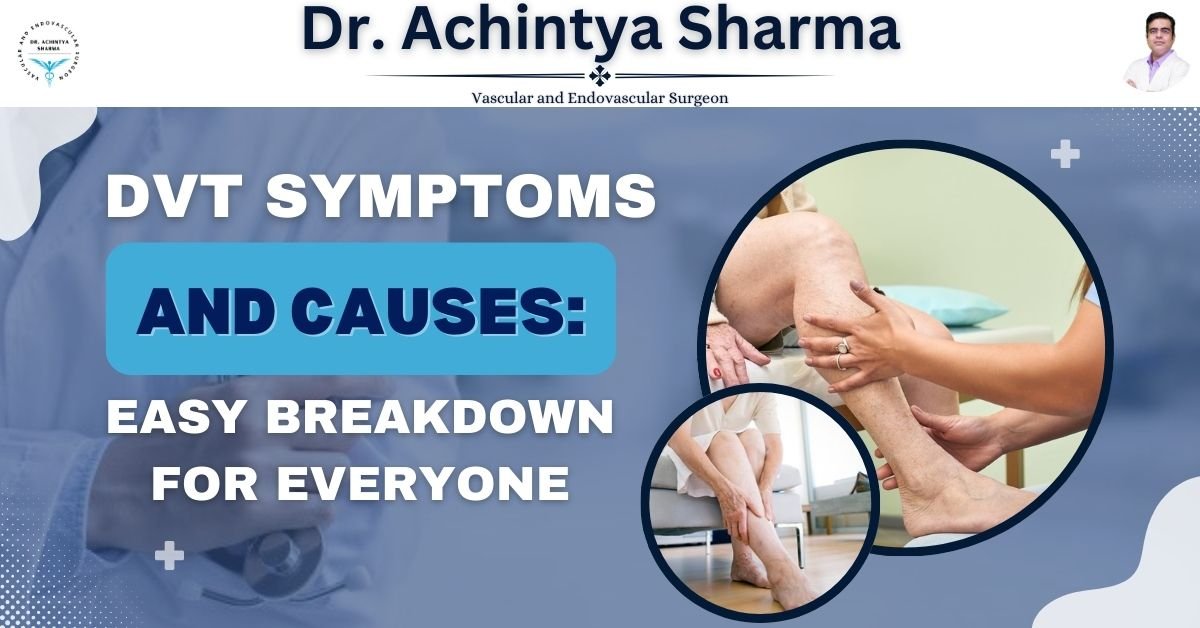
Deep Vein Thrombosis, commonly called DVT, is a health condition that often develops quietly without clear warning signs. Many people ignore early changes because they seem harmless or temporary. However, untreated DVT can lead to serious and life-threatening complications if not addressed in time. Understanding dvt symptoms plays an important role in recognizing the condition early and taking the right action. DVT mainly affects the legs and is closely connected to blood flow and daily lifestyle habits. With proper awareness and expert guidance from Dr. Achintya Sharma, DVT can be managed safely. This blog explains DVT in a simple and easy way to help readers identify warning signs and protect their overall health.
What Is DVT?
DVT is a condition where a clot blocks blood flow in a deep vein, often affecting the leg. This clot blocks normal blood flow and creates pressure inside the vein. Over time, this causes pain, swelling, and discomfort. The biggest risk arises when the clot travels to the lungs, causing pulmonary embolism. That is why understanding dvt symptoms early is very important. According to Dr.Achintya Sharma, early awareness and timely care reduce long-term complications and improve recovery.
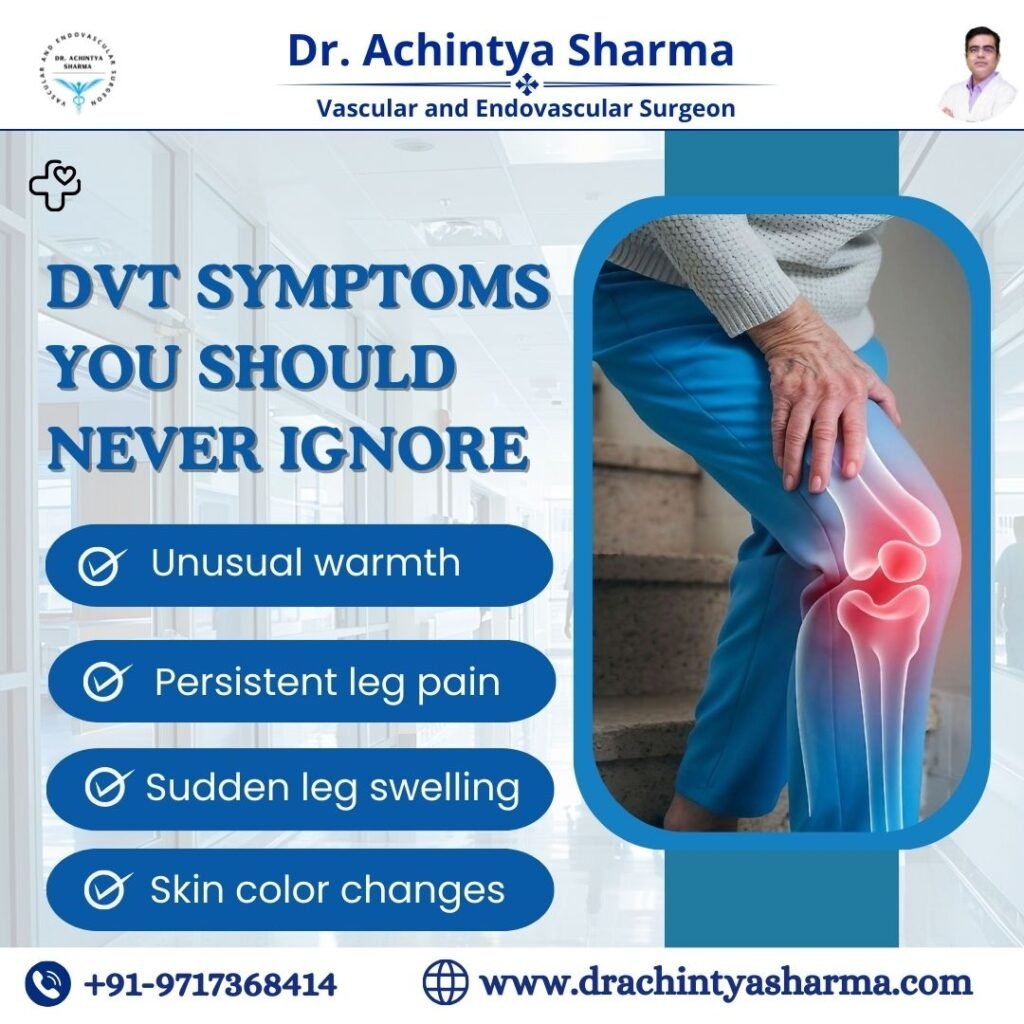
DVT Symptoms You Should Never Ignore
1. Sudden leg swelling
Swelling in one leg, especially around the calf or ankle, can be an early sign of DVT.
2. Persistent leg pain
Pain or tenderness in the calf or thigh that worsens while walking should not be ignored.
3. Unusual warmth
The affected leg may feel warmer than the other, even without any injury.
4. Skin color changes
Redness or dark discoloration on the leg can indicate blocked blood flow.
5. Leg heaviness or tightness
A constant heavy or tight feeling in one leg may signal developing clots.
6. Ongoing muscle cramps
Frequent cramps that do not improve with rest can be linked to DVT symptoms.
7. Notice unusual leg fatigue
One leg feeling more tired or weak than the other can be a warning sign.
According to Dr.Achintya Sharma, even mild DVT symptoms should be checked early to avoid serious outcomes.
Early Warning Signs and Causes of DVT
Not all warning signs are easy to notice in the early stages. Some people experience mild discomfort, pressure, or heaviness in the leg without visible swelling, which often delays diagnosis and treatment. Such problems commonly develop when blood flow slows due to long sitting hours, limited movement, or dehydration, which can trigger dvt symptoms. Factors like smoking, excess body weight, surgery, injury, and certain medical conditions also put extra strain on the veins and support clot formation. Dr. Achintya Sharma advises paying attention to any unusual leg sensation that lasts more than a day.
Risk Factors and Importance of Early Medical Care
Certain people face a higher risk due to slower blood circulation, including older adults, pregnant women, and those using hormonal treatments. Individuals with conditions such as diabetes, heart disease, or a history of blood clots should remain alert. A sedentary lifestyle further increases the chances of developing dvt symptoms by reducing blood flow in the legs.
Early diagnosis allows treatment through medication and lifestyle changes, while late detection may require advanced procedures. Dr. Achintya Sharma advises consulting a doctor if leg swelling appears without injury or if pain, warmth, or skin changes persist. Sudden breathlessness along with leg discomfort requires immediate medical care, and regular check-ups are recommended for high-risk individuals.
Prevention Tips for DVT
1. Stay active daily
Regular walking keeps blood flowing smoothly in the legs.
2. Avoid long sitting hours
Take short breaks to stand or move during work or travel.
3. Drink enough water
Proper hydration prevents blood from becoming thick.
4. Maintain a healthy weight
Balanced weight reduces pressure on leg veins.
5. Wear comfortable clothing
Loose clothes allow better blood circulation.
6. Follow medical advice
Use compression stockings or medicines if prescribed.
FAQs
Q1. What are the most common dvt symptoms?
Leg swelling, pain, warmth, and skin color changes are typical signs of deep vein clotting.
Q2. Can DVT be life-threatening?
Yes. Untreated dvt symptoms can lead to pulmonary embolism.
Q3. Can young people develop DVT?
Yes. Long sitting hours and lifestyle habits increase risk at any age.
Q4. How is DVT diagnosed?
Doctors use ultrasound scans, blood tests, and physical examination.
Q5. When should I consult Dr.Achintya Sharma?
Consult Dr.Achintya Sharma if dvt symptoms persist or risk factors are present.
Conclusion
DVT is a serious condition, but it can often be prevented with early awareness and timely action. Understanding dvt symptoms helps you recognize warning signs before they turn into serious complications. Even small changes such as leg pain, swelling, warmth, or discomfort should never be ignored. Simple lifestyle habits like staying active, avoiding long sitting hours, and seeking medical advice early can make a significant difference. With expert guidance from Dr. Achintya Sharma, DVT can be managed safely and effectively. Listening to your body and acting early protects your veins, reduces health risks, and can ultimately save lives. If you notice any unusual changes in your legs, consult a doctor without delay.