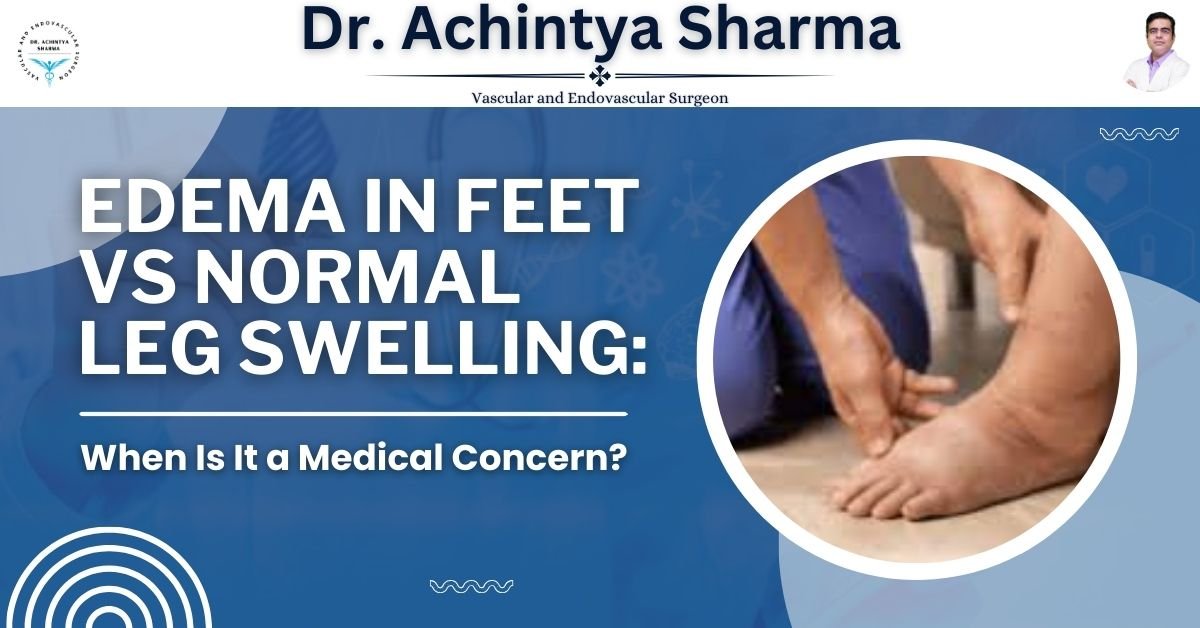
Why do people often ignore edema in feet?
Many people think swelling in the feet is normal. They blame long working hours, travel, or heat. In some cases, that is true. Temporary swelling can happen due to fatigue or standing for long periods.
However, persistent swelling in the feet is different. It may indicate an underlying circulation issue. Excess fluid builds up within the tissues and does not resolve easily. Without proper medical care and timely management, the condition can worsen and begin to interfere with daily activities and overall comfort.
What causes normal leg swelling?
Normal swelling usually happens because of temporary factors:
- Long standing hours
- Sitting continuously
- High salt intake
- Hormonal changes
- Minor injuries
- Hot weather
It does not usually require medical leg swelling treatment.
What exactly is edema in feet?
Swelling in the feet occurs when excess fluid builds up in the lower limbs. It often points to an underlying medical issue rather than simple tiredness.
Common causes include:
- Chronic venous insufficiency and poor circulation
- Heart, kidney, or liver disorders
- Lymphatic blockage
- Certain medications
This condition typically requires medical evaluation and appropriate clinical care to address the root cause effectively.

How can you tell if swelling is serious?
Certain warning signs suggest that persistent foot swelling requires medical attention:
- Swelling lasting more than 2 days – Persistent swelling may indicate an underlying circulation or organ-related problem.
- Pain while walking – Discomfort during movement can signal reduced blood flow or increased pressure in the legs.
- One leg more swollen than the other – Uneven swelling may suggest a blood clot or localized vascular issue.
- Skin discoloration – Darkening or color changes can indicate chronic vein pressure or poor circulation.
- Warmth or redness – These signs may point toward infection or inflammation in the affected area.
If these symptoms appear, immediate medical attention and timely intervention may be necessary to prevent complications like ulcers or blood clots.
When does edema in feet become a medical risk?
Untreated edema in feet can lead to:
- Skin thickening
- Pigmentation changes
- Varicose veins
- Non-healing wounds
Chronic fluid buildup increases pressure in the veins. Over time, this can damage the skin and surrounding tissues.
How do doctors diagnose the cause of swelling?
Diagnosis usually includes:
- Detailed discussion of symptoms and medical history
- Physical examination of the affected area
- Doppler ultrasound to assess blood flow
- Blood tests to check organ function
Specialists like Dr. Achintya Sharma carefully evaluate the root cause of edema in feet before recommending a treatment plan. Accurate diagnosis ensures the right leg swelling treatment is chosen.
What treatment options are available?
Treatment depends on the cause of edema in feet.
Common leg swelling treatment options include:
- Compression therapy
- Medications
- Lifestyle modification
- Salt restriction
- Supervised exercise programs
If venous insufficiency is present, targeted procedures help restore proper blood flow. Dr.Achintya Sharma offers advanced vascular care designed to treat the cause rather than just the symptoms.
When Should You Seek Advanced Care for Persistent Swelling?
You should consult a specialist if:
- Swelling affects daily activities
- Skin ulcers or open sores develop
- Swelling does not improve with rest
- Imaging shows venous damage
- Conservative treatments fail
Timely evaluation and appropriate vascular care can provide long-term relief and prevent serious complications.
Frequently Asked Questions (FAQs)
Q1. Is swelling in feet always a sign of edema?
No. Temporary swelling due to fatigue, heat, or prolonged standing is common. Edema is suspected when swelling is persistent, recurrent, or associated with pain, skin changes, or asymmetry.
Q2. Can edema in feet go away on its own?
Mild edema may improve with rest and lifestyle changes, but persistent edema usually does not resolve without medical treatment because it often has an underlying cause.
Q3. Is edema in feet dangerous if left untreated?
Yes. Untreated edema can lead to skin damage, infections, ulcers, varicose veins, and an increased risk of blood clots.
Q4. Does leg elevation help reduce edema?
Leg elevation can temporarily reduce swelling, but it does not treat the underlying cause of edema. Medical evaluation is still important if swelling keeps returning.
Q5. Who should I consult for chronic leg or foot swelling?
A vascular specialist is ideal for evaluating circulation-related causes of swelling and recommending appropriate treatment.
Conclusion
Swelling in the legs is not always harmless. Temporary swelling improves with rest, but persistent edema in feet may signal an underlying circulation disorder. Proper diagnosis ensures that the right leg swelling treatment is started at the right time. If symptoms continue or worsen, professional evaluation is essential. Timely care protects your mobility, skin health, and overall well-being. Do not ignore ongoing swelling. Early intervention leads to better long-term results and healthier circulation.
Book your appointment
Website: https://drachintyasharma.com/
Phone: +91-8192000230
Email: drachintyasharma@gmail.com