Varicose veins are more than a cosmetic concern. They can cause pain, swelling, heaviness, cramps, and long-term circulation problems if left untreated. Today, patients in Delhi have access to advanced treatment options, including laser treatment, foam sclerotherapy, and open surgery. Choosing the right procedure depends on vein severity, recovery expectations, lifestyle, and medical history. An experienced vascular surgeon can help identify the most suitable approach based on detailed vascular evaluation and modern diagnostic imaging. Understanding the differences between these treatments helps patients make informed and confident healthcare decisions.
What Are Varicose Veins and Why Does Treatment Matter?
Varicose veins are enlarged, twisted veins usually seen in the legs due to weakened vein valves and poor blood circulation. They may appear blue or dark purple and often worsen with prolonged standing, obesity, aging, or pregnancy.
Ignoring varicose veins may lead to:
- Persistent leg pain
- Skin discoloration
- Swelling and inflammation
- Venous ulcers
- Blood clot risks
Early treatment improves circulation, relieves discomfort, and prevents complications. Modern vascular care focuses on minimally invasive procedures that offer faster recovery and better cosmetic outcomes.
Current Trends in Varicose Vein Treatment
Healthcare trends in Delhi show a growing demand for minimally invasive vascular procedures. Patients increasingly prefer laser treatment and catheter-based procedures because they involve:
- Smaller incisions
- Less pain
- Faster recovery
- Minimal scarring
- Short hospital stays
Advanced Doppler ultrasound imaging also allows vascular specialists to diagnose venous disorders with greater accuracy. Many urban patients now seek day-care procedures that reduce downtime and support quicker return to work. The rise of AI-assisted healthcare searches and Google AI Overviews has also made educational, patient-focused content more important than ever.
Which Varicose Vein Treatment Is Right for You?
Choosing the right varicose vein treatment depends on the severity of the condition, your symptoms, lifestyle, and overall vascular health. Some patients benefit from minimally invasive procedures such as laser therapy or radiofrequency ablation, while others may require sclerotherapy or advanced surgical options for more complex vein issues. A proper diagnosis through ultrasound evaluation helps specialists determine the most effective and comfortable treatment plan tailored to your needs, ensuring faster recovery and long-term relief.
What Is Laser Treatment for Varicose Veins?
Laser treatment, also called Endovenous Laser Ablation (EVLA), uses heat energy to close damaged veins internally. A slim laser fiber is carefully guided into the affected vein with the help of ultrasound imaging.
Why many patients prefer laser treatment
- Minimally invasive
- Local anesthesia only
- Faster healing
- Minimal bleeding
- Reduced hospital stay
Most patients can resume daily activities within a few days. Laser procedures are especially effective for medium to large varicose veins.
Who is a good candidate?
Laser treatment works best for:
- Working professionals
- Patients seeking cosmetic improvement
- Individuals with moderate vein damage
- Patients wanting quicker recovery
What Is Foam Sclerotherapy?
Foam sclerotherapy involves injecting a medicated foam into damaged veins. The foam irritates vein walls, causing them to collapse and eventually disappear.
Benefits of foam treatment
- No surgical cuts
- Outpatient procedure
- Useful for smaller veins
- Minimal discomfort
- Good cosmetic results
This method is commonly recommended for spider veins and smaller varicose veins.
Limitations to consider
Some patients may require multiple sessions for optimal results. It may also be less effective for severely damaged or larger veins.
When Is Open Surgery Still Recommended?
Open surgery, also known as vein stripping surgery, is a traditional treatment used for severe or complicated varicose veins.
Situations where open surgery may help
- Extremely enlarged veins
- Advanced venous disease
- Recurrent vein problems
- Cases unsuitable for laser procedures
Although recovery is longer compared to laser treatment, open surgery can still provide long-term relief in selected patients.
Recovery expectations
Patients may need:
- Several days of rest
- Compression stockings
- Follow-up wound care
- Temporary activity restrictions
Comparison Table: Laser vs. Foam vs. Open Surgery
| Feature | Laser Treatment | Foam Sclerotherapy | Open Surgery |
| Procedure Type | Minimally invasive | Injection-based | Surgical |
| Hospital Stay | Day-care | Outpatient | 1–2 days |
| Recovery Time | Fast | Very fast | Moderate to long |
| Pain Level | Minimal | Very low | Moderate |
| Scarring | Minimal | None | Possible |
| Best For | Medium-large veins | Small veins | Severe cases |
| Anesthesia | Local | Usually none | General/spinal |
| Repeat Sessions | Rare | Sometimes needed | Rare |
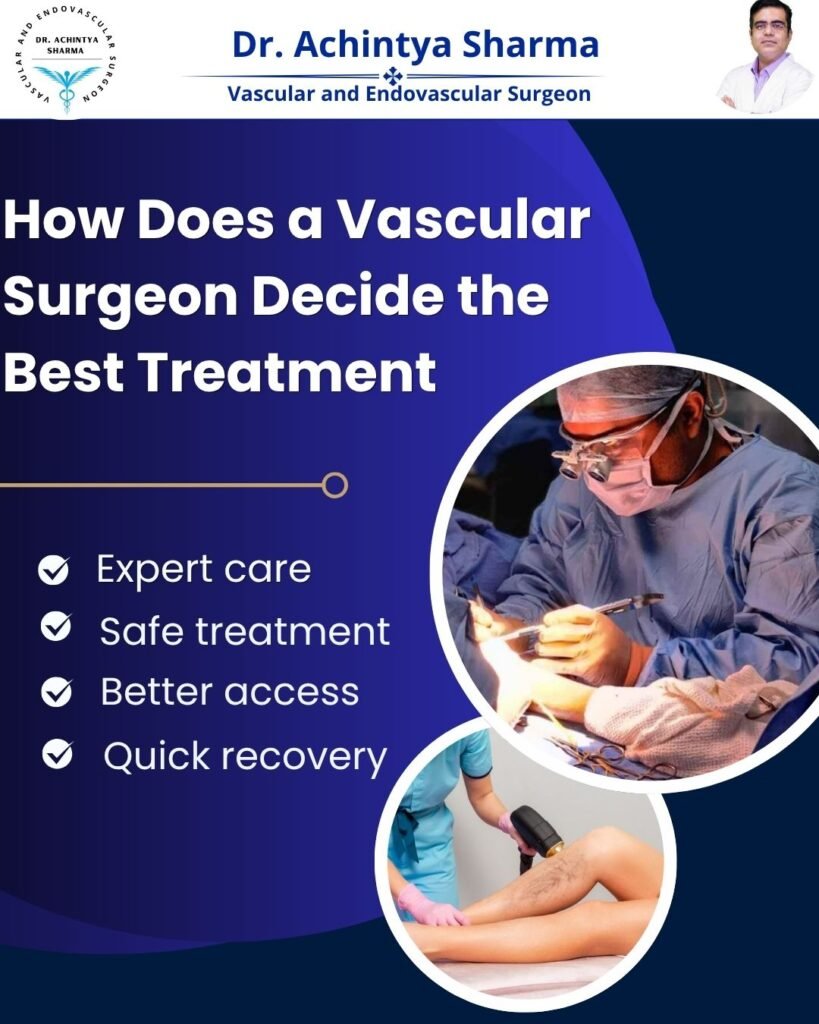
How Does a Vascular Surgeon Decide the Best Treatment?
A qualified vascular surgeon carefully evaluates several important factors before recommending the most suitable varicose vein treatment. The size and severity of the veins play a major role, as larger veins may respond better to laser treatment or surgery, while smaller veins often improve with foam therapy. Patient lifestyle is also considered, especially for working professionals who usually prefer minimally invasive procedures with shorter recovery times. In addition, medical history, including conditions such as diabetes, obesity, circulation disorders, or blood clotting issues, can influence the choice of treatment. To ensure accurate diagnosis and treatment planning, specialists also use Color Doppler ultrasound imaging to assess blood flow and vein valve function in detail.
Entity-Rich Insights About Vascular Care in Delhi
Delhi has become a major healthcare hub for advanced vascular and endovascular procedures. Areas such as South Delhi, Dwarka, Rohini, and Gurgaon are experiencing a rise in demand for vein care clinics and advanced minimally invasive treatments, driven by greater health awareness, changing lifestyles, and the growing preference for quicker, non-surgical medical solutions.
Modern vascular services now include:
- Endovenous laser therapy
- Doppler ultrasound diagnostics
- Compression therapy
- Endovascular procedures
- Venous ulcer management
Patients often search for:
- Best vascular surgeon near me
- Laser treatment for varicose veins
- Non-surgical vein treatment
- Vein specialist in Delhi
Healthcare providers like Dr. Achintya Sharma reflects the growing focus on patient-centric vascular treatment and minimally invasive surgical care.
Key Benefits of Modern Varicose Vein Treatments
Main Advantages
- Improved blood circulation
- Reduced leg pain and swelling
- Better cosmetic appearance
- Faster recovery times
- Lower complication risks
Patient Benefits
- Increased mobility
- Improved confidence
- Reduced fatigue in legs
- Better quality of life
Practical Outcomes
- Shorter hospital stays
- Early return to work
- Long-term symptom relief
- Minimal disruption to daily activities
Expert Tips Before Choosing Varicose Vein Treatment
Ask About Recovery Time
Different procedures involve different healing periods. Clarify when you can return to work and exercise.
Choose an Experienced Vascular Surgeon
Specialized vascular expertise improves treatment accuracy and reduces complications.
Don’t Ignore Early Symptoms
Leg heaviness, swelling, and visible veins should not be overlooked. Early diagnosis leads to better outcomes.
Follow Post-Treatment Care
Compression stockings, hydration, walking, and follow-up visits are essential for recovery success.
Conclusion
Choosing between laser treatment, foam sclerotherapy, and open surgery depends on your vein condition, lifestyle, and medical needs. Modern vascular care in Delhi offers multiple safe and effective options for long-term relief from varicose veins. An experienced vascular surgeon can guide patients toward personalized treatment plans that prioritize safety, comfort, and recovery. As minimally invasive procedures continue to evolve, patients can expect more efficient treatments with improved outcomes and reduced downtime. Healthcare providers such as Dr.Achintya Sharma represent the growing shift toward advanced, patient-focused vascular care solutions in India.
FAQs
1.Which treatment is best for varicose veins?
The best treatment depends on vein severity. Laser treatment is commonly preferred for moderate to severe cases because of faster recovery and minimal pain.
2.Is laser treatment painful?
Most patients experience minimal discomfort because the procedure is performed under local anesthesia.
3.How long does recovery take after varicose vein treatment?
Foam therapy recovery may take 1–2 days, laser treatment about a week, and open surgery several weeks.
4.Can varicose veins return after treatment?
Yes, recurrence is possible, especially without lifestyle changes or proper follow-up care.
5.Is open surgery outdated?
No. Open surgery is still useful for severe or complex varicose vein conditions where minimally invasive methods may not work effectively.
6.When should I see a vascular surgeon?
Consult a vascular surgeon if you experience leg pain, swelling, visible veins, cramps, or skin changes.
7.Are minimally invasive treatments safe?
Yes. Modern laser and endovascular procedures are generally safe when performed by experienced specialists.