Have you ever wondered why your legs ache or swell after standing for long hours? One possible reason could be issues with your saphenous vein. This vein plays a key role in your leg’s blood circulation. When it malfunctions, it can cause varicose veins, pain, or even more serious complications. Understanding how it works helps you detect problems early. If you’re looking for expert advice, Dr. Achintya Sharma has helped many patients identify and treat saphenous vein disorders successfully. In this blog, we’ll explore what the saphenous vein does, why it matters, and how to treat related conditions effectively.
Why the Saphenous Vein Matters
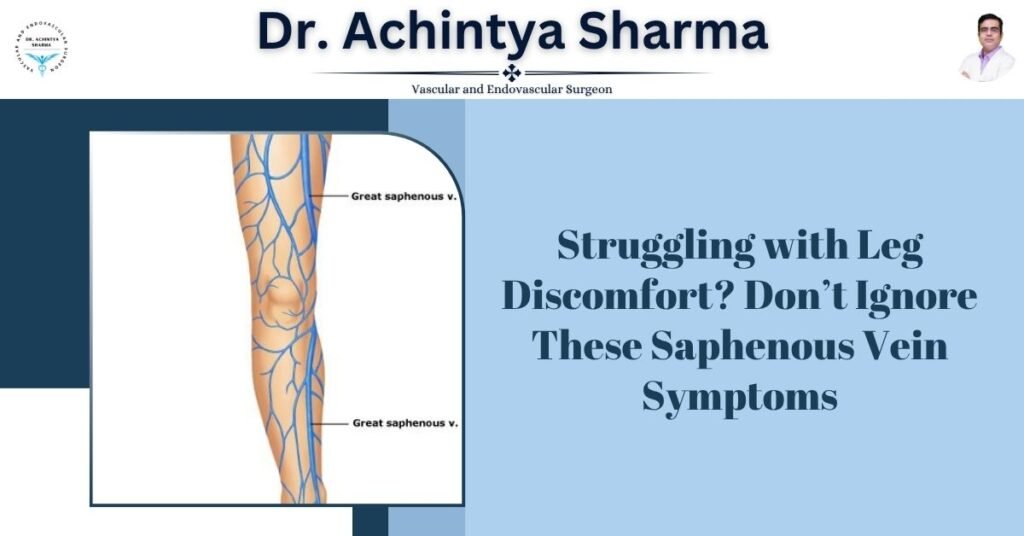
The saphenous vein starts near your ankle and travels up your leg, helping move blood upward toward the heart. It’s split into two main branches — one runs along the inside of your leg, the other along the back of your calf. Though often overlooked, this vein plays a big role in healthy circulation.
When healthy, it functions silently. But when it’s damaged or weak, it can lead to venous insufficiency. This means your blood pools in your legs instead of flowing properly to the heart. This leads to:
- Varicose veins
- Swelling and heaviness
- Discoloration
- Skin ulcers in severe cases
Real-Life Scenario You Can Relate To
Imagine this: You’re a nurse working long shifts. By the end of the day, your legs feel tired, swollen, and sometimes even painful. You ignore it, thinking it’s part of the job. Months go by, and now you see bulging, twisted veins on your calves.
This could be a classic case of saphenous vein insufficiency. A visit to a vascular specialist like Dr. Achintya Sharma can make a world of difference. He diagnoses such conditions using a Doppler ultrasound, a painless test that shows how blood flows through your veins.
Why Early Diagnosis and Treatment Matter
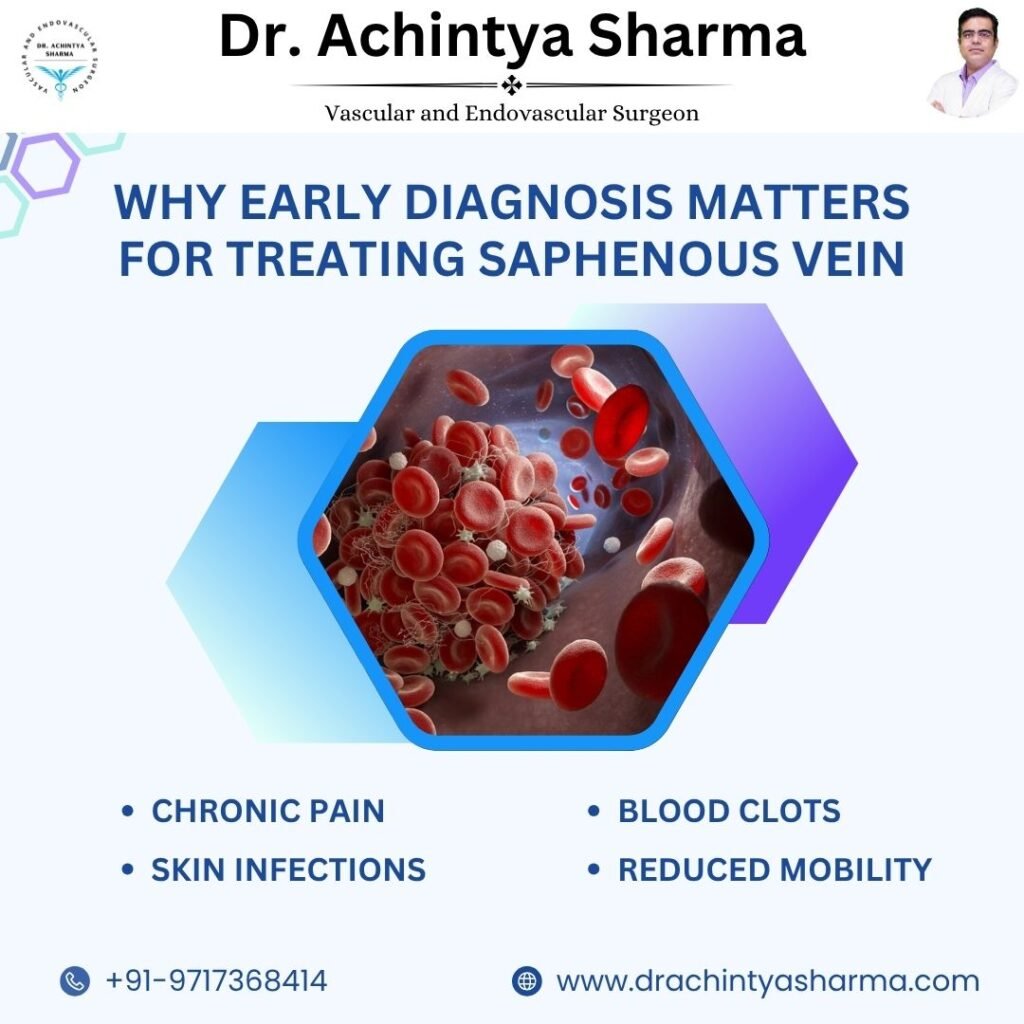
Ignoring vein problems doesn’t make them go away. In fact, untreated saphenous vein issues can progress, leading to:
- Chronic pain
- Blood clots (Deep Vein Thrombosis)
- Skin infections
- Reduced mobility
The good news? Modern medicine offers minimally invasive treatments. Procedures like Endovenous Laser Therapy (EVLT) and Radiofrequency Ablation (RFA) close off the faulty vein, redirecting blood to healthier ones. These are quick, outpatient procedures with minimal downtime.
Dr. Achintya Sharma, a seasoned vascular surgeon, specializes in these advanced techniques. His approach is patient-focused and minimally invasive, ensuring faster recovery and long-term results.
What You Should Do Next
If you’ve noticed symptoms like:
- Leg swelling
- Tired or heavy legs
- Visible varicose veins
- Skin changes on the lower legs
…don’t wait. Early evaluation could prevent future complications. A vascular consultation, especially with experts like Dr. Achintya Sharma, helps you understand the condition and map out the best treatment plan.
Here’s what you can expect during a consultation:
- Medical history and symptom review
- Physical examination
- Ultrasound of the saphenous vein
- Personalized treatment plan
From simple lifestyle tweaks to minor procedures, treatment is available—and acting early leads to better results.
Quick Facts About the Saphenous Vein
- The great saphenous vein is often used in heart bypass surgeries.
- It lies just under the skin, making it easily accessible for both diagnosis and treatment.
- About 30-40% of adults develop varicose veins, often due to saphenous vein issues.
- Standing for long periods, obesity, and genetics are common risk factors.
- Treatments today are 98% effective and require no hospital stay.
Conclusion
The saphenous vein plays a vital role in your circulatory system. When it malfunctions, your quality of life can suffer. But with awareness, early detection, and expert care, you can prevent long-term issues. Whether you’re dealing with mild symptoms or severe varicose veins, solutions exist—and they’re easier than you might think. With today’s advanced techniques and patient-first care, experts like Dr. Achintya Sharma make vein treatment simple, safe, and effective. Listen to your body—don’t delay getting help. Take the first step toward healthier legs and better living today.