Table of Contents
Mesenteric artery disease symptoms may initially resemble indigestion or other common digestive problems. However, repeated abdominal pain after meals, avoiding food because of discomfort and unexplained weight loss can be important warning signs that deserve medical evaluation.
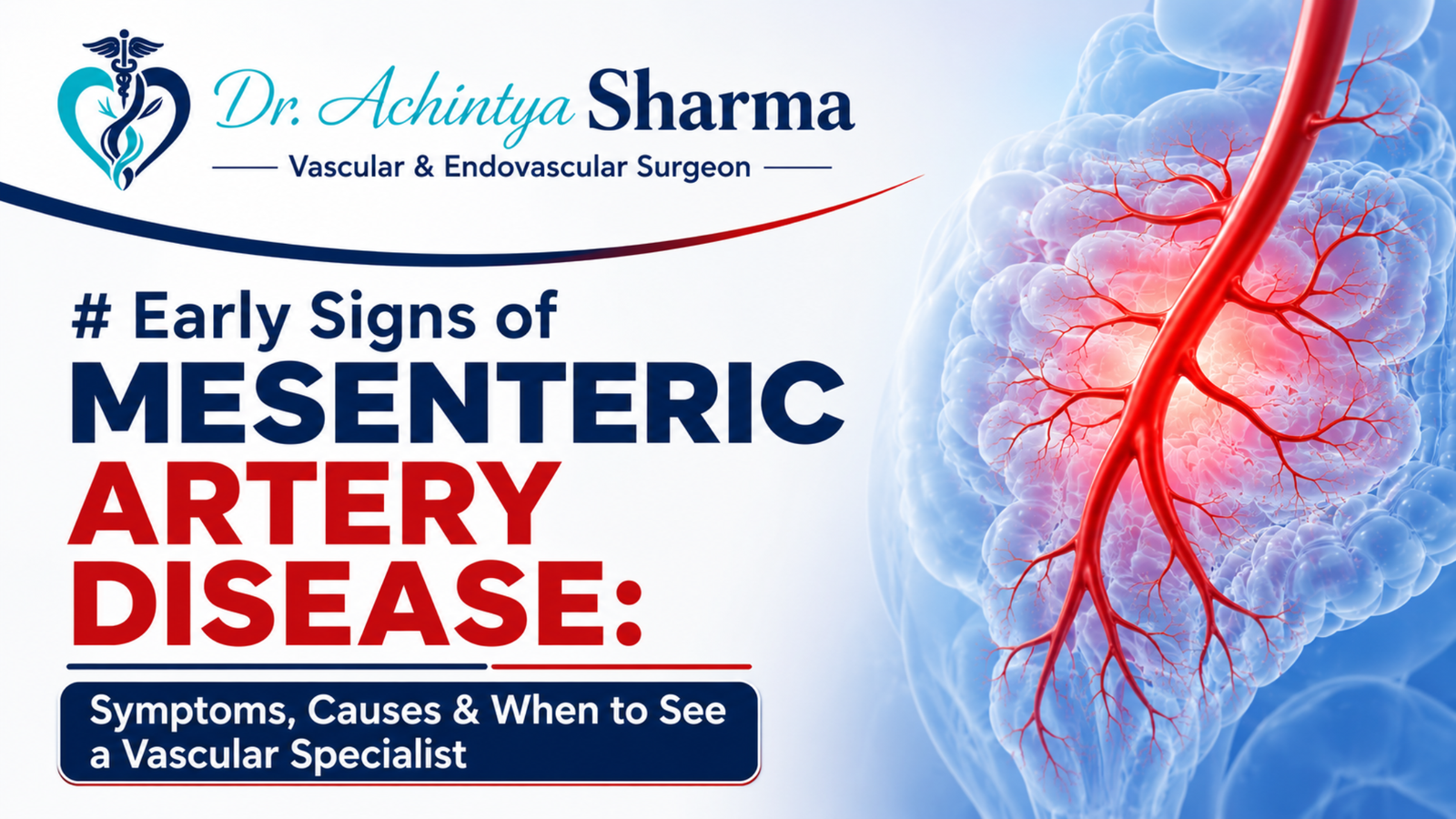
Mesenteric artery disease affects the arteries responsible for delivering blood to the intestines. When these vessels become narrowed or blocked, intestinal tissues may receive inadequate blood and oxygen. The condition can develop gradually as chronic mesenteric ischemia or occur suddenly as acute mesenteric ischemia.
Understanding the symptoms, causes, risk factors and available diagnostic approaches can help patients recognize when professional medical assessment may be necessary. People in Delhi with persistent or concerning symptoms can consider evaluation by a qualified vascular specialist.
Medical disclaimer: This article is for general educational purposes and does not replace a medical examination or individualized advice from a qualified healthcare professional. Sudden or severe abdominal pain requires urgent medical attention.
Quick Answers About Mesenteric Artery Disease
| Question | Quick Answer |
| What is mesenteric artery disease? | A condition in which arteries supplying the intestines become narrowed or blocked, reducing intestinal blood flow. |
| What is the most common chronic symptom? | Repeated abdominal pain that may develop after eating. |
| Can it cause weight loss? | Yes. Pain after meals may cause food avoidance and reduced calorie intake. |
| What causes it? | Atherosclerosis is a common cause of chronic disease, while sudden blockages can result from clots or emboli. |
| Who is at greater risk? | People with smoking history, diabetes, high cholesterol, hypertension, atherosclerosis or cardiovascular disease may have increased risk. |
| How is it diagnosed? | Medical assessment and vascular imaging, such as CT angiography or Doppler ultrasound, may be used. |
| Who treats it? | A vascular specialist or vascular surgeon may evaluate and manage mesenteric arterial disease. |
| When is it an emergency? | Sudden, severe or rapidly worsening abdominal pain requires urgent medical assessment. |
What Is Mesenteric Artery Disease?
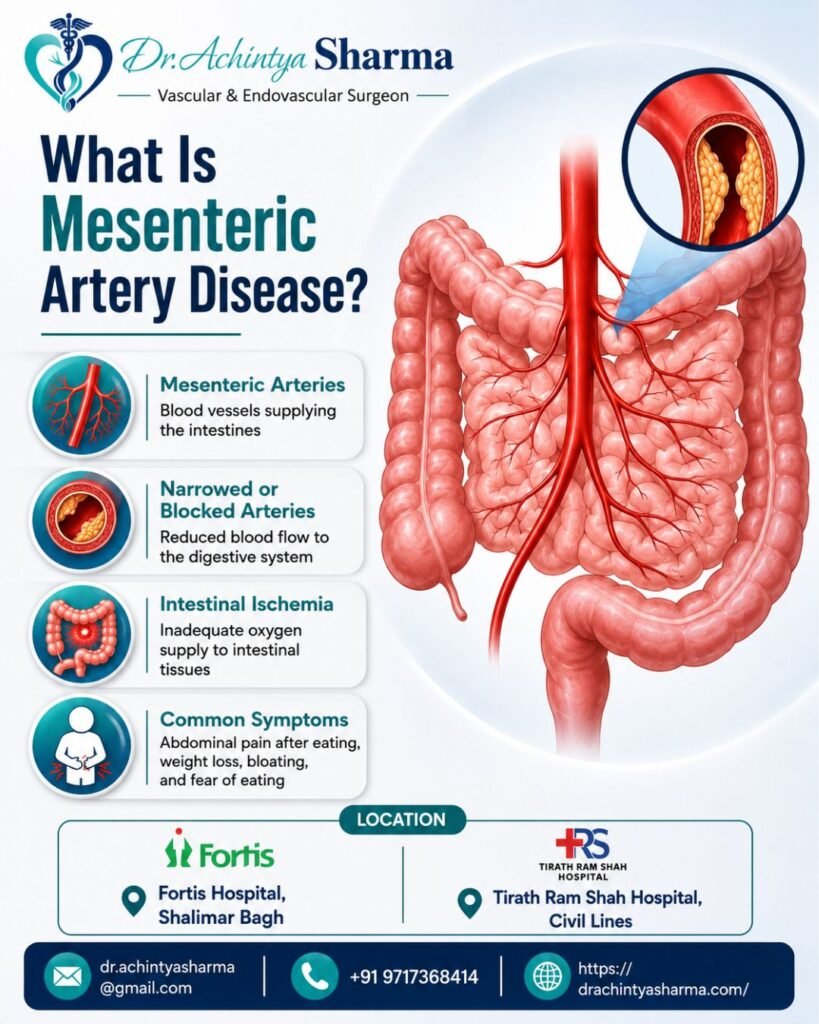
Mesenteric arteries are blood vessels that supply oxygen-rich blood to the intestines. If these arteries become significantly narrowed or blocked, the intestines may not receive enough blood to meet their needs.
When the reduction in blood flow develops over time, it may result in chronic mesenteric ischemia. Patients can experience recurring symptoms, particularly around meals.
A sudden interruption of intestinal blood flow is known as acute mesenteric ischemia. This can be serious and may require immediate medical evaluation and treatment.
What Are the Early Signs of Mesenteric Artery Disease?
Symptoms can differ between patients and may depend on how quickly blood flow is affected.
1. Abdominal Pain After Eating
One of the key symptoms associated with chronic mesenteric ischemia is abdominal discomfort that develops after meals.
The pain may appear because digestion increases the intestines’ demand for blood. When the arteries cannot supply sufficient blood, discomfort may become noticeable after eating.
Repeated post-meal abdominal pain should not automatically be assumed to be indigestion, particularly when it follows a consistent pattern.
2. Avoiding Meals Because of Pain
A person may begin eating smaller portions or skipping meals after noticing that food triggers abdominal discomfort.
This behavior can develop gradually. Some patients may not initially realize that their changing eating habits are connected to their abdominal symptoms.
3. Unintentional Weight Loss
Weight loss can occur when someone consistently reduces food intake to prevent abdominal pain.
Unexplained weight loss becomes more concerning when it occurs alongside recurring abdominal pain, reduced appetite or food avoidance.
4. Nausea and Digestive Symptoms
Some people may experience nausea, diarrhea or other changes in bowel habits.
These symptoms are not specific to mesenteric artery disease and can occur with many gastrointestinal conditions. Their significance depends on the overall symptom pattern and medical history.
5. Sudden and Severe Abdominal Pain
Sudden, intense abdominal pain can be a warning sign of acute mesenteric ischemia.
Unlike chronic symptoms that may develop gradually, acute ischemia can progress quickly. Severe or rapidly worsening abdominal pain should therefore be treated as a medical concern requiring urgent assessment.
What Causes Mesenteric Artery Disease?
Atherosclerosis
Atherosclerosis is a major cause of chronic arterial disease. It occurs when fatty deposits and other substances accumulate within artery walls, gradually reducing the space available for blood flow.
When this process affects mesenteric arteries, blood supply to the intestines may become inadequate.
Blood Clots
A blood clot can obstruct a mesenteric artery and cause a sudden reduction in intestinal blood flow.
In some cases, a clot may originate elsewhere in the cardiovascular system and travel to an intestinal artery.
Cardiovascular Conditions
Diseases affecting the heart and blood vessels may increase the likelihood of arterial blockages. A patient with widespread vascular disease may therefore require careful assessment when symptoms suggest intestinal blood-flow problems.
Other Causes
Mesenteric ischemia can have different causes depending on whether the problem is acute or chronic. Identifying the underlying cause is important because treatment depends on the patient’s specific condition.
What Are the Risk Factors for Mesenteric Artery Disease?
Several factors can increase the likelihood of atherosclerotic or vascular disease, including:
- Smoking
- Diabetes
- High blood pressure
- High cholesterol
- Atherosclerosis
- Cardiovascular disease
- Increasing age
- Previous arterial disease
- Other conditions associated with poor blood-vessel health
Having a risk factor does not mean that abdominal symptoms are necessarily caused by mesenteric artery disease. However, the combination of risk factors and characteristic symptoms may make vascular evaluation more important.
Why Should Mesenteric Artery Disease Symptoms Not Be Ignored?
The symptoms can have an impact beyond abdominal discomfort.
When eating repeatedly triggers pain, a person may start avoiding food. Over time, this can contribute to:
- Reduced calorie intake
- Unintentional weight loss
- Poor nutrition
- Weakness or reduced energy
- Declining quality of life
In some cases, chronic arterial disease can coexist with or progress to a more serious reduction in intestinal blood flow.
Early medical assessment can help determine whether symptoms are vascular in origin or caused by another condition.
Who Should Consider Medical Evaluation?
People With Repeated Post-Meal Abdominal Pain
If abdominal pain repeatedly follows meals without a clear explanation, discussing the pattern with a healthcare professional is advisable.
People With Unexplained Weight Loss
Unintentional weight loss should be assessed, especially when it occurs together with abdominal pain or reduced food intake.
People With Cardiovascular Risk Factors
Individuals with diabetes, hypertension, high cholesterol, smoking history or known vascular disease may require greater attention to persistent symptoms.
Older Adults With New Abdominal Symptoms
As vascular disease becomes more common with increasing age, new or persistent abdominal symptoms in older adults may require careful evaluation.
People With Sudden Severe Pain
Sudden and severe abdominal pain is different from the gradual symptoms often associated with chronic disease. It requires urgent medical assessment.
How Is Mesenteric Artery Disease Diagnosed?
Diagnosing mesenteric artery disease generally starts with a detailed medical history and physical examination.
A healthcare professional may ask about:
- The timing of abdominal pain
- Whether symptoms occur after eating
- Duration and severity of pain
- Changes in appetite
- Food avoidance
- Weight changes
- Bowel symptoms
- Smoking history
- Diabetes and blood-pressure history
- Previous cardiovascular or vascular conditions
Further investigations may then be recommended.
CT Angiography
CT angiography (CTA) can provide detailed images of blood vessels and may help identify narrowing, blockage or other abnormalities affecting the mesenteric arteries.
Doppler Ultrasound
Doppler ultrasound can evaluate blood flow through blood vessels and may be useful in selected patients.
Other Investigations
The exact diagnostic approach depends on the patient’s symptoms, examination findings, medical history and suspected cause.
Because abdominal pain can result from many conditions, vascular imaging should be interpreted alongside the overall clinical picture.
How Is Mesenteric Artery Disease Treated?
Treatment is individualized according to the cause, severity and type of disease.
Medical Management
Depending on the patient’s condition, treatment may include medications and management of cardiovascular risk factors.
Controlling conditions such as high blood pressure, diabetes and high cholesterol can be an important part of vascular care.
Smoking cessation may also be recommended for people who smoke.
Angioplasty and Stenting
For selected patients with significant arterial narrowing, an endovascular procedure such as angioplasty with stent placement may be considered to improve blood flow.
The suitability of an endovascular procedure depends on factors such as the location and severity of the blockage and the patient’s overall health.
Surgical Treatment
In certain cases, open vascular surgery may be considered.
The decision between endovascular and surgical treatment depends on individual anatomy, disease severity, previous treatment and other clinical considerations.
Treatment of Acute Mesenteric Ischemia
Acute mesenteric ischemia requires rapid assessment because prolonged interruption of intestinal blood flow can cause serious bowel damage.
Treatment is determined by the cause and may involve urgent medical, endovascular or surgical intervention.
How Is Mesenteric Artery Disease Different From Common Digestive Problems?
| Feature | Mesenteric Artery Disease | Other Digestive Conditions |
| Pain pattern | May repeatedly develop after eating | Can vary significantly |
| Food avoidance | May occur because meals trigger pain | Depends on the condition |
| Weight loss | May result from reduced food intake | Depends on the underlying problem |
| Underlying cause | Reduced blood supply to the intestines | May involve inflammation, infection, acid, motility or other causes |
| Diagnosis | May require vascular imaging | Depends on the suspected condition |
| Treatment | May involve medication, endovascular treatment or surgery | Depends on the underlying diagnosis |
The presence of abdominal pain alone does not establish mesenteric artery disease. A proper medical evaluation is necessary to identify the actual cause.
When Should You See a Vascular Specialist in Delhi?
You may want to discuss your symptoms with a healthcare professional if you experience:
- Repeated abdominal pain after meals
- Unexplained weight loss
- Persistent food avoidance
- Ongoing digestive symptoms with vascular risk factors
- A history of atherosclerosis or cardiovascular disease
- Symptoms that are becoming more frequent or severe
A vascular specialist can review the symptoms and determine whether further vascular evaluation is appropriate.
For patients searching for mesenteric artery disease treatment in Delhi, Dr. Achintya Sharma provides information regarding vascular and endovascular conditions and their management.
The appropriate treatment depends on individual clinical findings and imaging results.
When Is Mesenteric Artery Disease an Emergency?
Seek urgent medical attention for:
- Sudden severe abdominal pain
- Rapidly worsening abdominal pain
- Severe abdominal pain accompanied by vomiting
- Severe pain associated with fever or significant weakness
- Other sudden symptoms suggesting a serious abdominal condition
Acute mesenteric ischemia can compromise intestinal blood flow quickly. Delaying assessment may increase the risk of serious complications.
Do not wait for a routine vascular consultation if abdominal pain is sudden, severe or rapidly worsening.
What Can You Do Before a Vascular Consultation?
If your symptoms are persistent but not an emergency, keeping a simple symptom record can be helpful.
Consider noting:
- When the pain begins
- How long it lasts
- Whether it follows a particular meal
- What foods appear to trigger symptoms
- Changes in appetite
- Changes in bowel habits
- Recent weight changes
- Any episodes of nausea or vomiting
- Relevant medical conditions
- Current medications
- Previous imaging or medical reports
Bring this information to your consultation so the doctor can better understand the pattern of your symptoms.
Why Consider Dr. Achintya Sharma for Vascular Evaluation in Delhi?
Patients with suspected vascular conditions often need an assessment that considers symptoms, medical history, vascular risk factors and imaging findings together.
Dr. Achintya Sharma provides vascular and endovascular care information for patients seeking evaluation of conditions affecting blood circulation.
If your symptoms suggest a possible vascular cause, a specialist consultation can help determine whether vascular investigations are appropriate and what treatment options may be considered.
Treatment decisions should always be based on individual clinical assessment rather than symptoms alone.
Frequently Asked Questions
1. What are the first signs of mesenteric artery disease?
Recurring abdominal pain after meals is one of the characteristic symptoms of chronic mesenteric ischemia. Other possible signs include food avoidance, reduced food intake and unexplained weight loss.
Sudden severe abdominal pain may indicate acute mesenteric ischemia and requires urgent assessment.
2. What does mesenteric artery disease pain feel like?
Chronic mesenteric ischemia may cause abdominal discomfort that repeatedly develops after eating. The timing and severity can vary between individuals.
Sudden severe abdominal pain has a different significance and may require emergency evaluation.
3. Can mesenteric artery disease cause weight loss?
Yes. If eating repeatedly causes pain, a person may reduce meals or portion sizes. Continued food avoidance can result in unintended weight loss and nutritional problems.
4. Is abdominal pain after eating always a sign of mesenteric artery disease?
No. Abdominal pain after eating can occur with many digestive and other medical conditions.
However, repeated post-meal pain accompanied by food avoidance, weight loss or vascular risk factors should be evaluated by a healthcare professional.
5. What causes mesenteric artery disease?
Atherosclerosis is a common cause of chronic mesenteric arterial disease. Acute cases may occur because of a sudden arterial blockage caused by a blood clot or embolus.
Risk factors include smoking, diabetes, high blood pressure, high cholesterol and cardiovascular disease.
6. Which doctor treats mesenteric artery disease?
A vascular specialist or vascular surgeon can evaluate suspected disease affecting the mesenteric arteries. Other specialists may also be involved depending on the patient’s symptoms and underlying health conditions.
7. How is mesenteric artery disease diagnosed?
Diagnosis may involve a clinical examination followed by vascular imaging. CT angiography is commonly used to visualize the mesenteric arteries, while Doppler ultrasound may be appropriate in selected cases.
8. Can mesenteric artery disease be treated without surgery?
Treatment depends on the severity and type of disease. Some patients may be managed with medication and risk-factor control, while others may require endovascular treatment or surgery.
9. Is chronic mesenteric ischemia dangerous?
It can become serious when intestinal blood flow is significantly reduced. Chronic symptoms can also result in food avoidance, weight loss and nutritional problems.
Sudden worsening symptoms require urgent medical evaluation.
10. When should I see a vascular specialist for abdominal pain?
Consider medical evaluation if abdominal pain repeatedly occurs after eating, particularly when it is accompanied by unexplained weight loss, food avoidance or cardiovascular risk factors.
Sudden or severe abdominal pain should be evaluated urgently rather than waiting for a routine appointment.
Conclusion
Mesenteric artery disease can be difficult to recognize because some of its symptoms overlap with common digestive disorders. However, a repeated pattern of abdominal pain after eating, avoiding meals and unexplained weight loss should not be ignored.These symptoms do not automatically mean that a person has mesenteric artery disease, but they can indicate the need for further medical evaluation. A vascular specialist can assess the patient’s history, symptoms and risk factors and determine whether vascular imaging or additional investigations are appropriate.Sudden, severe or rapidly worsening abdominal pain requires urgent medical attention, as acute mesenteric ischemia can threaten the blood supply to the intestines.
Looking for Mesenteric Artery Disease Evaluation in Delhi?
If you are experiencing persistent abdominal pain after meals, unexplained weight loss or food avoidance, take the next step and speak with a qualified vascular specialist.
Dr. Achintya Sharma provides vascular and endovascular consultation in Delhi. Contact the clinic to discuss your symptoms, understand the appropriate diagnostic approach and explore suitable treatment options based on your individual condition.
Don’t ignore recurring symptoms—schedule a vascular consultation and get the right evaluation for your abdominal pain.