Table of Contents
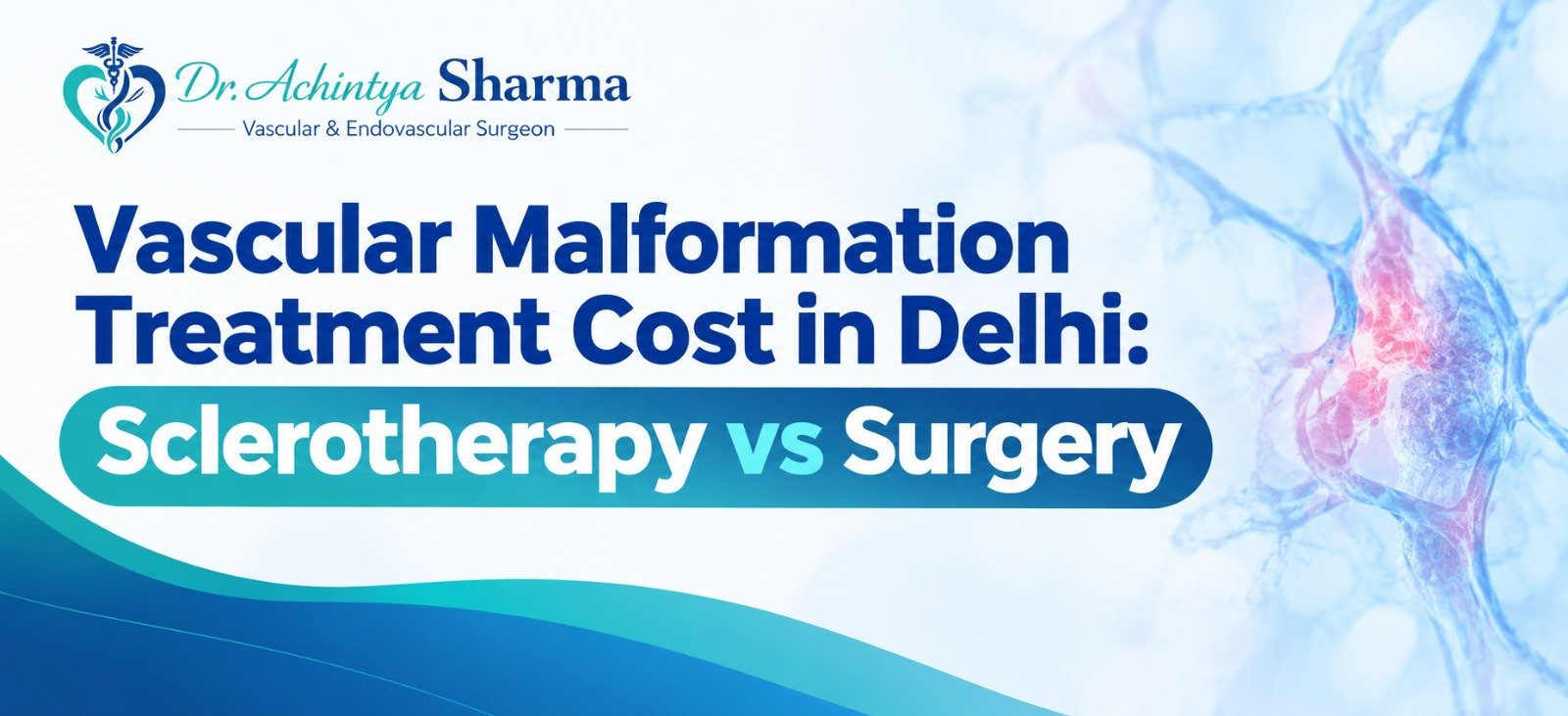
Vascular Malformation Treatment Cost in Delhi varies according to the type, size and location of the abnormal blood vessels, along with the treatment approach required. Venous malformations, arteriovenous malformations (AVMs), lymphatic malformations and other vascular anomalies may require different diagnostic tests and procedures. Sclerotherapy, embolization and surgery may be used alone or in combination depending on the individual case.
This guide explains the major vascular malformation treatment cost factors, how sclerotherapy compares with surgery, what diagnostic imaging may be required, and what patients should consider when choosing a vascular malformation specialist in Delhi.
Vascular Malformation Treatment Cost in Delhi
| Factor | What Patients Should Know |
| Best for | Patients with symptomatic, enlarging or functionally significant vascular malformations |
| Location | Delhi hospitals and specialist vascular centres |
| Treatment duration | May require one or several sessions depending on the condition |
| Suitable for | Venous malformations, AVMs, lymphatic malformations and selected vascular anomalies |
| Pricing consideration | Cost varies by lesion type, size, imaging, procedure and hospital requirements |
| Follow-up needed | Often required, particularly after minimally invasive or staged treatment |
| Alternatives | Observation, compression, sclerotherapy, embolization, surgery or combined treatment |
| How to get started | Clinical evaluation followed by appropriate vascular imaging and treatment planning |
What Are the Main Benefits of Appropriate Treatment?
Depending on the condition, vascular malformation treatment may help:
- Reduce pain and swelling: Treatment can reduce abnormal blood or lymphatic flow.
- Control bleeding: Selected interventions can help manage bleeding associated with vascular lesions.
- Improve movement and function: Lesions affecting muscles, joints or nearby structures may interfere with normal function.
- Improve appearance: Treatment may reduce visible swelling or skin changes in appropriate cases.
- Limit complications: Timely assessment can help identify lesions that require closer monitoring or intervention.
The expected outcome depends on the type and extent of the malformation. Treatment is often aimed at controlling symptoms and improving function rather than promising complete removal in every case.
Sclerotherapy vs Surgery for Vascular Malformation
Sclerotherapy: is a minimally invasive treatment in which a sclerosant is delivered into abnormal vessels, often using imaging guidance. It is commonly used for venous malformations and may require several sessions.
Surgery: may be considered when a malformation is localized and can be removed safely, or when residual tissue, deformity or functional problems remain after other treatment. Complete removal is not always possible, and some malformations can recur.
| Factor | Sclerotherapy | Surgery |
| Approach | Minimally invasive | Surgical removal |
| Best suited to | Many venous/low-flow lesions | Selected localized lesions |
| Incision | Usually no major surgical incision | Requires an incision |
| Recovery | Often shorter, depending on case | Usually longer |
| Sessions | Multiple sessions may be needed | May be one operation or staged |
| Cost factors | Agent, imaging, anesthesia and number of sessions | Surgeon, operating room, anesthesia, admission and complexity |
| Main advantage | Less invasive treatment | Can remove selected localized tissue |
| Limitation | May not completely eliminate the malformation | Complete removal may be difficult and recurrence is possible |
For AVMs, embolization is frequently part of treatment planning. It involves catheter-based delivery of materials that reduce abnormal blood flow and may sometimes be combined with surgery.
What Factors Affect Vascular Malformation Surgery Cost in Delhi?
Several factors can change the final vascular malformation surgery cost in Delhi, including:
- Type of malformation – Venous, lymphatic and AVM lesions have different treatment requirements.
- Size and location – Lesions close to nerves, muscles or important structures may require more complex planning.
- Diagnostic imaging – Doppler ultrasound, MRI/MR angiography or other vascular imaging may be required.
- Procedure selected – Sclerotherapy, embolization, surgery or combined treatment can have different costs.
- Number of treatment sessions – Some vascular malformations need staged treatment.
- Anesthesia and hospital stay – These can add to the overall treatment expense.
- Follow-up care – Repeat imaging, consultations and additional procedures may contribute to total cost.
For this reason, a quoted procedure price should not be treated as a universal vascular malformation treatment cost.
Expert Insights and Current Treatment Trends
Modern vascular anomaly management increasingly uses image-guided and minimally invasive techniques. Ultrasound and X-ray guidance can help specialists target abnormal vessels during sclerotherapy, while catheter-based embolization can be used for selected AVMs.
Another important trend is individualized treatment planning. Complex vascular malformations may benefit from coordinated input from vascular surgery, interventional radiology and other specialists depending on the lesion’s location and clinical features.
Importantly, treatment should be based on the vascular anatomy and symptoms rather than choosing a procedure solely because it appears less expensive or less invasive.
Why Do People Consider Dr. Achintya Sharma in Delhi?
Dr. Achintya Sharma provides vascular and endovascular care in Delhi, including management of venous malformations, AVMs and lymphatic conditions. His published service information describes the use of minimally invasive approaches such as sclerotherapy and targeted embolization, along with individualized treatment planning.
His practice information lists consultations at Fortis Hospital, Shalimar Bagh and Tirath Ram Shah Hospital, Civil Lines, Delhi.
Patients considering treatment can review their diagnosis, imaging reports, available treatment options and expected follow-up requirements during a specialist consultation.
Best Practices for Better Treatment Planning
Before proceeding with vascular malformation treatment in Delhi, patients can:
- Bring previous Doppler, MRI, CT or angiography reports to the consultation.
- Ask which type of vascular malformation is present.
- Understand whether the lesion is low-flow or high-flow.
- Ask whether sclerotherapy, embolization, surgery or observation is appropriate.
- Confirm whether multiple treatment sessions may be necessary.
- Ask about anesthesia, hospital stay and recovery.
- Discuss possible complications and recurrence.
- Request an explanation of what is included in the estimated treatment cost.
A treatment estimate becomes more meaningful after the specialist understands the lesion’s anatomy and clinical requirements.
FAQs
1. What is a vascular malformation?
A vascular malformation is an abnormal development of blood vessels or lymphatic vessels. It may involve veins, arteries, capillaries or lymphatic channels. Some lesions are low-flow, such as venous and lymphatic malformations, while AVMs are high-flow lesions. Symptoms vary according to size, location and type.
2. What does a vascular malformation specialist in Delhi do?
A vascular malformation specialist evaluates the type and extent of the lesion, reviews vascular imaging and develops an appropriate treatment plan. Depending on the condition, management may involve observation, sclerotherapy, embolization, surgery or a combination of approaches.
3. What is sclerotherapy for vascular malformation in Delhi?
Sclerotherapy involves injecting a sclerosant into abnormal vessels to reduce or close them. It is commonly used for venous malformations and is usually performed with imaging guidance. Several treatment sessions may sometimes be required.
4. What is arteriovenous malformation treatment?
AVM treatment may involve embolization, surgery or a combination of both. Embolization uses a catheter to deliver materials that reduce abnormal blood flow. The appropriate approach depends on the AVM’s anatomy, location, symptoms and treatment goals.
5. How long does vascular malformation treatment take?
Treatment duration varies considerably. Some procedures may be performed as day-care interventions, while complex procedures may require hospital observation. If multiple sclerotherapy or embolization sessions are necessary, treatment can extend over several weeks or months.
6. Is vascular malformation treatment painful?
The level of discomfort depends on the treatment and the individual lesion. Sclerotherapy may cause temporary swelling, irritation or bruising after treatment. Anesthesia or sedation may be used depending on the procedure and patient requirements.
7. When should I see a vascular surgeon for a vascular malformation?
A specialist evaluation is advisable when a suspected or known malformation causes pain, swelling, bleeding, skin changes, functional limitations or progressive enlargement. Urgent assessment may be necessary for significant bleeding or sudden worsening symptoms.
8. Is vascular malformation treatment available in Delhi?
Yes. Vascular and endovascular specialists in Delhi provide evaluation and treatment for different vascular malformations. Available approaches may include sclerotherapy, embolization and selected surgical procedures depending on the diagnosis and clinical requirements.
9. What should I ask about vascular malformation treatment cost?
Ask whether the estimate includes consultation, diagnostic imaging, procedure charges, medicines, anesthesia, hospital stay and follow-up. Also ask whether multiple treatment sessions may be required. This gives a more realistic understanding of the overall treatment cost.
Conclusion
Vascular Malformation Treatment Cost in Delhi depends on the type and complexity of the lesion rather than a fixed standard price. Sclerotherapy, embolization and surgery each have different roles, and some patients may require more than one treatment session. If you are considering vascular malformation treatment in Delhi, discuss your imaging findings and treatment options with a qualified specialist. Dr. Achintya Sharma provides vascular and endovascular evaluation in Delhi for appropriate cases.
Consult Dr. Achintya Sharma for expert evaluation and personalized treatment guidance. Book a consultation today to discuss your condition and treatment options.