Aortic aneurysm symptoms are often silent in the early stage, but they can become dangerous if ignored. Many people in Delhi search for early signs of aortic aneurysm rupture symptoms because timely detection can prevent serious health risks. This condition happens when the aorta becomes weak and starts to bulge. In the beginning, symptoms may be very mild or not noticeable at all. However, small warning signs like pain or unusual body sensations can appear. Understanding how to detect aortic aneurysm symptoms early is very important. With proper awareness and expert guidance from specialists like Dr. Achintya Sharma, the risk of complications can be effectively reduced.
What Are Thoracic Aortic Aneurysm Warning Signs?
Thoracic aortic aneurysm warning signs are mainly related to the chest and nearby organs and are often mild at first. Many people don’t know how to detect an aortic aneurysm because symptoms develop slowly. Thoracic aortic aneurysm symptoms can worsen over time if ignored. In contrast, abdominal aortic aneurysm symptoms that male patients experience usually affect the lower body. Early recognition is important for timely diagnosis and prevention.
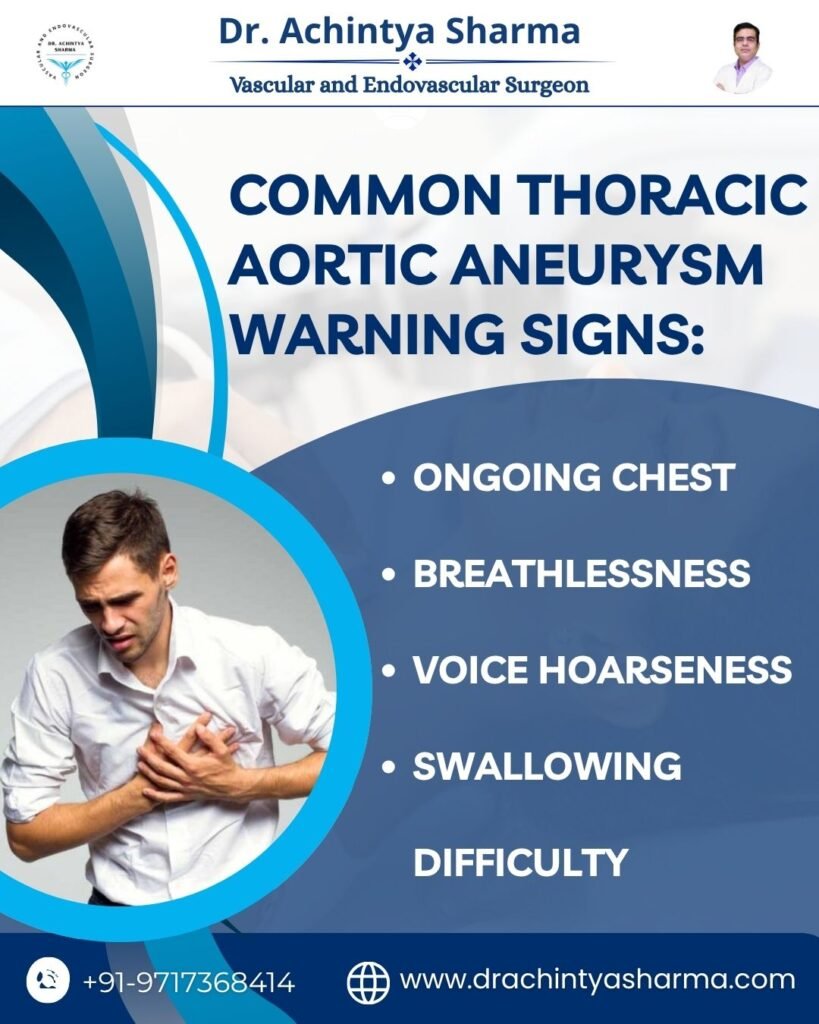
Common Thoracic Aortic Aneurysm Warning Signs:
- Chest or upper back pain that does not go away
- Shortness of breath or difficulty breathing
- Hoarseness in voice
- Trouble swallowing
Abdominal symptoms before aneurysm rupture in male patients are slightly different and usually affect the lower body. However, both conditions can become life-threatening if ignored. These symptoms may seem harmless at first, but they can indicate a serious underlying issue, so early medical attention is essential.
What Are Abdominal Aortic Aneurysm Symptoms Male Patients Should Know?
How to detect an aortic aneurysm is a common question, especially among high-risk individuals. Abdominal aortic aneurysm symptoms that male patients experience are slightly different and usually affect the lower body. Many cases of abdominal aortic aneurysm symptoms in male patients report include pain and a pulsating sensation. These symptoms may seem harmless at first, but they can indicate a serious issue. Many individuals notice a pulsating feeling near the navel. which is often one of the earliest signs. Along with this, there may be deep abdominal or lower back pain that persists over time. Some people also experience sudden discomfort while sitting or walking, making daily activities difficult.
How to Detect an Aortic Aneurysm Early?
Knowing how to detect an aortic aneurysm early is important to prevent serious complications. Doctors use imaging tests like ultrasound, CT scan, or MRI for accurate diagnosis. People with high blood pressure, a smoking history, or a family history should get regular checkups. Many individuals miss the early signs until the condition becomes severe.
What Are Symptoms Before Aneurysm Rupture?
- Sudden and severe chest, back, or abdominal pain
- Rapid heartbeat or low blood pressure
- Dizziness or fainting
- Excessive sweating and confusion
Symptoms before aneurysm rupture are severe and require immediate medical attention. These signs show that the condition has reached a critical stage and can become life-threatening if not treated quickly. Recognizing these warning signs early and acting fast can help save lives.
FAQ:
Q1: What are the early signs of an aortic aneurysm?
Early signs of an aortic aneurysm include mild pain in the chest or abdomen, a pulsating feeling, and breathing issues.
Q2: How to detect an aortic aneurysm?
An aortic aneurysm can be detected through imaging tests like ultrasound, CT scan, or MRI.
Q3: What are the thoracic aortic aneurysm warning signs?
Common warning signs include chest pain, shortness of breath, and difficulty swallowing.
Q4: What symptoms appear before aneurysm rupture?
Severe pain, dizziness, and low blood pressure are major symptoms before rupture.
Q5: How to detect an aortic aneurysm?
Aortic aneurysm can be detected using imaging tests like ultrasound, CT scan, or MRI, especially in high-risk individuals.
Conclusion
Aortic aneurysm symptoms should never be ignored, even if they seem mild at first. Understanding early signs of aortic aneurysm and recognizing symptoms before aneurysm rupture can help prevent serious complications. In Delhi, where lifestyle risks are increasing, regular health checkups and early diagnosis are very important. Understanding the early signs of an aortic aneurysm can help in timely diagnosis and treatment. Consulting an experienced specialist like Dr. Achintya Sharma ensures proper care and timely treatment, helping you stay safe and healthy.