Peripheral artery disease self-care is important for managing symptoms and improving daily life. It includes regular exercise, a healthy diet, and good daily habits. These steps help improve blood flow, reduce pain, and keep you active. Many people ignore early signs, but early action can prevent serious problems. Peripheral artery disease develops when arteries become narrow due to plaque buildup, poor circulation, smoking, high cholesterol, and inactivity. These factors can cause pain and movement issues. Learning how to manage peripheral artery disease and making simple lifestyle changes can help control symptoms, improve mobility, and support better overall vascular health over time.
Effective Peripheral Artery Disease Self-Care Practices?
Peripheral artery disease self-care focuses on simple lifestyle changes to improve circulation and reduce symptoms. Regular walking or light exercise boosts blood flow, while a healthy diet, quitting smoking, and managing blood sugar and cholesterol are essential. Proper foot care also helps prevent complications, leading to better mobility and overall vascular health.
Diet and Home Care Tips:
- Eat fruits and vegetables
- Choose whole grains
- Avoid oily and processed foods.
- Stay hydrated
- Avoid long sitting hours
Maintaining the right diet for peripheral artery disease helps reduce plaque buildup and supports heart health. Many people also follow PAD self-care at home, which includes staying active and taking care of their feet. In addition, natural treatment for PAD such as weight control and stress management can support recovery. These simple habits play a key role in improving overall health.
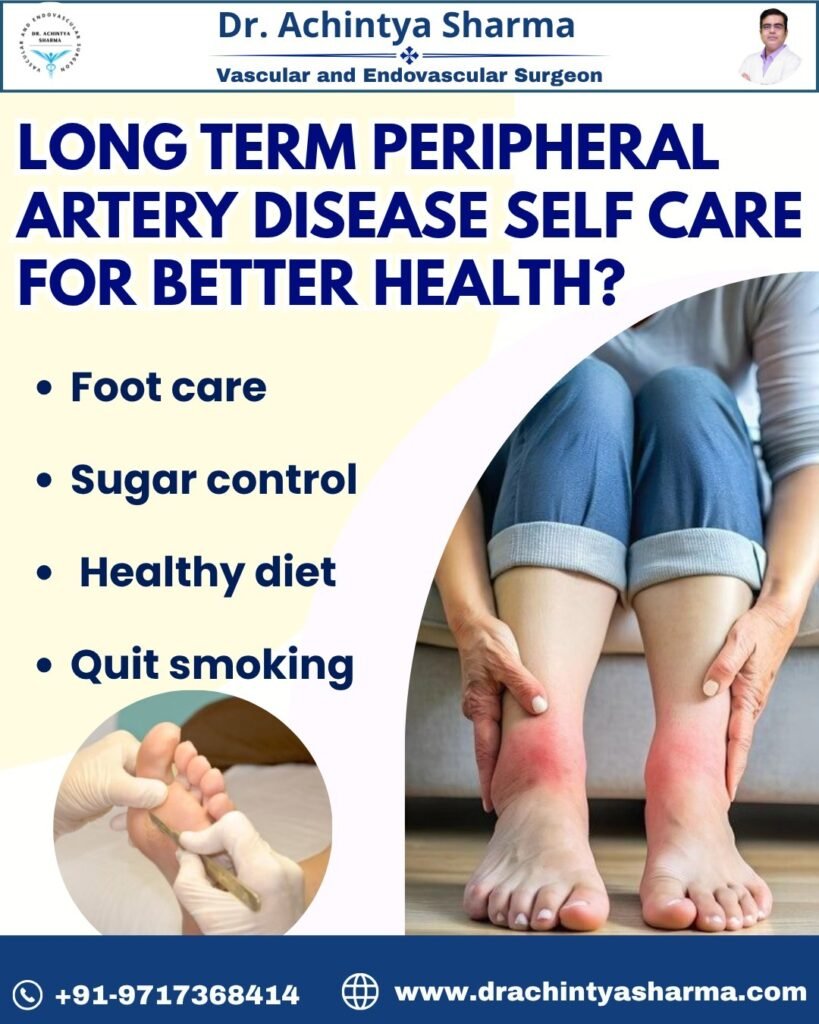
Long-Term Peripheral Artery Disease Self-Care for Better Health?
Peripheral artery disease self care also focuses on long-term lifestyle management to prevent the condition from worsening. Staying physically active, maintaining a healthy weight, and avoiding smoking are key steps in improving circulation. Regular monitoring of symptoms and following a proper routine can help detect issues early. Including exercise for peripheral artery disease and following a proper diet for peripheral artery disease can further support recovery. Simple habits practised consistently can make a significant difference. By adopting effective PAD self care at home, patients can manage symptoms better and maintain overall vascular health.
Quick Tips for Peripheral Artery Disease Self-Care:
- Walk daily or do light exercise to improve blood flow
- Eat a healthy, balanced diet
- Avoid smoking and limit alcohol
- Control blood sugar and cholesterol levels
- Take proper care of your feet
- Stay active and avoid sitting for long periods
Long-term peripheral artery disease self-care focuses on simple daily habits that support better circulation and overall health. Staying active with regular walking, eating a balanced diet, avoiding smoking, and controlling blood sugar and cholesterol are essential. Proper foot care and avoiding long sitting hours also help prevent complications and improve mobility over time.
Frequently Asked Questions (FAQs)
- What is peripheral artery disease self-care?
It includes daily habits like exercise, diet, and lifestyle changes to manage symptoms.
- How to manage peripheral artery disease?
You can manage it through regular exercise, a healthy diet, and avoiding smoking.
- Which exercise is most effective for managing peripheral artery disease?
Walking is the most effective and recommended exercise.
- Can PAD self care at home help?
It helps in managing symptoms when followed consistently.
- Is natural treatment for PAD useful?
It supports recovery but should be combined with medical advice.
Conclusion
Peripheral artery disease self-care is important for better health and fewer problems. Simple habits like regular exercise, a balanced diet, and healthy lifestyle choices can help a lot. Following PAD self care at home and doing proper exercise for peripheral artery disease helps improve blood flow and reduce pain and cramps. Pad self care at home. Eating the right diet for peripheral artery disease and using natural treatment for PAD can also support recovery. By learning how to manage peripheral artery disease, patients can move better, protect their vascular health, and live a more active and comfortable life.