Table of Contents
Choosing the right Vascular Surgeon in Delhi is important when symptoms involve veins, arteries, or blood circulation. Conditions such as varicose veins, peripheral artery disease (PAD), deep vein thrombosis (DVT), artery blockage, diabetic foot, and other vascular disorders may require specialist assessment. This guide explains what to check when comparing a vascular specialist, including qualifications, experience, diagnostic facilities, treatment options, communication, and follow-up care.
Quick Answers:
Choosing a Vascular Surgeon in Delhi
| Factor | What to Consider |
| Best For | Vein, artery, circulation, and vascular conditions requiring specialist evaluation |
| Location | Delhi and nearby NCR areas |
| Ideal Duration | Depends on diagnosis, procedure, recovery, and follow-up requirements |
| Suitable For | Adults with suspected or diagnosed vascular problems |
| Pricing Consideration | Depends on consultation, investigations, procedure type, hospital facilities, and complexity |
| Maintenance Needed | Follow-up and lifestyle or medication management may be required |
| Alternatives | A physician or other specialist may be involved depending on the underlying condition |
| How to Get Started | Arrange a consultation and bring previous reports, medications, and relevant medical history |
Why Is Choosing the Right Vascular Surgeon in Delhi Important?
A vascular surgeon diagnoses and manages conditions affecting blood vessels outside the heart and brain, including many disorders involving arteries and veins. The right specialist should be able to assess symptoms, identify the underlying vascular problem, recommend appropriate investigations, and explain suitable treatment options.
For patients in Delhi, choosing a Vascular Specialist in Delhi can also make ongoing evaluation and follow-up more practical. A careful selection should focus on relevant experience, diagnostic capabilities, treatment options, communication, and the type of vascular condition being treated rather than relying only on online ratings or consultation fees.
Who Should Consider a Vascular Surgeon in Delhi?
People experiencing persistent leg swelling, visible varicose veins, leg pain while walking, non-healing wounds, circulation problems, or symptoms associated with an artery or vein disorder may benefit from vascular assessment.
A vascular consultation may be appropriate when symptoms suggest a problem with blood vessels, particularly when they persist, worsen, or occur alongside risk factors such as diabetes, smoking, high blood pressure, or known cardiovascular disease. The appropriate specialist depends on the patient’s symptoms and diagnosis.
People With Vein Problems
Patients with symptomatic varicose veins, chronic venous problems, or suspected DVT may need specialist assessment.
People With Artery Problems
Those experiencing leg pain during walking, reduced circulation, non-healing wounds, or suspected artery blockage may require arterial evaluation.
People With Diabetes
Diabetic foot problems and wounds with poor healing may involve circulation issues and should be assessed appropriately.
People With Known Vascular Disease
Patients already diagnosed with vascular disease may require ongoing monitoring and treatment planning.
What Should You Look for in a Vascular Surgeon?
1. Relevant Qualifications and Experience
Check the surgeon’s medical qualifications, specialist training, and experience with the particular condition you need evaluated. Experience with Vascular Surgery in Delhi should be relevant to your symptoms rather than based simply on years of practice.
2. Appropriate Diagnostic Approach
A reliable Vascular Doctor in Delhi should assess your symptoms and medical history before recommending investigations. Depending on the suspected condition, tests may include Doppler ultrasound, CT angiography, or other vascular imaging.
3. Range of Treatment Options
Ask whether the specialist manages both medical and procedural treatment where appropriate. Depending on the condition, treatment may include medication, lifestyle measures, minimally invasive procedures, endovascular treatment, or surgery.
4. Clear Communication
A good consultation should leave you with a clear understanding of the diagnosis, recommended investigations, available treatment options, potential benefits and risks, and expected follow-up.
5. Appropriate Follow-Up
Vascular care does not always end after a procedure. Ask about follow-up appointments, monitoring, medication management, wound care when applicable, and lifestyle recommendations.
Top Benefits of Choosing the Right Vascular Specialist
Selecting an appropriate Vein and Artery Specialist in Delhi can help patients:
- Receive condition-specific evaluation
- Understand the cause of their symptoms
- Access appropriate vascular diagnosis
- Compare medical, endovascular, and surgical options
- Receive individualized treatment planning
- Understand potential risks and expected follow-up
- Avoid unnecessary procedures through proper assessment
The goal should be appropriate care based on clinical findings rather than choosing a specialist solely because of marketing claims.
How Does a Vascular Surgeon Compare With Other Specialists?
| Factor | Vascular Surgeon | General Physician | Other Relevant Specialist |
| Focus | Blood vessels and vascular disorders | Broad medical conditions | Depends on specialty |
| Vein problems | Specialist assessment | Initial evaluation may be possible | May involve other specialists |
| Artery blockage | Specialist vascular evaluation | May identify need for referral | Depends on location and cause |
| Procedures | Surgical and endovascular options where appropriate | Generally non-surgical management | Specialty-dependent |
| Diagnosis | Vascular examination and imaging | General clinical assessment | Condition-specific |
| Follow-up | Vascular monitoring when required | General health management | Depends on diagnosis |
A physician may be an appropriate starting point for some symptoms, while a vascular surgeon is particularly relevant when a blood-vessel disorder is suspected or already diagnosed.
Expert Insights and Emerging Trends
Modern vascular care increasingly includes minimally invasive and endovascular approaches for selected conditions. Diagnostic imaging can help specialists understand the location and severity of vascular disease and select an appropriate treatment strategy.
However, technology should support clinical decision-making rather than replace it. The most suitable approach depends on factors such as the patient’s symptoms, anatomy, overall health, disease severity, and previous treatments.
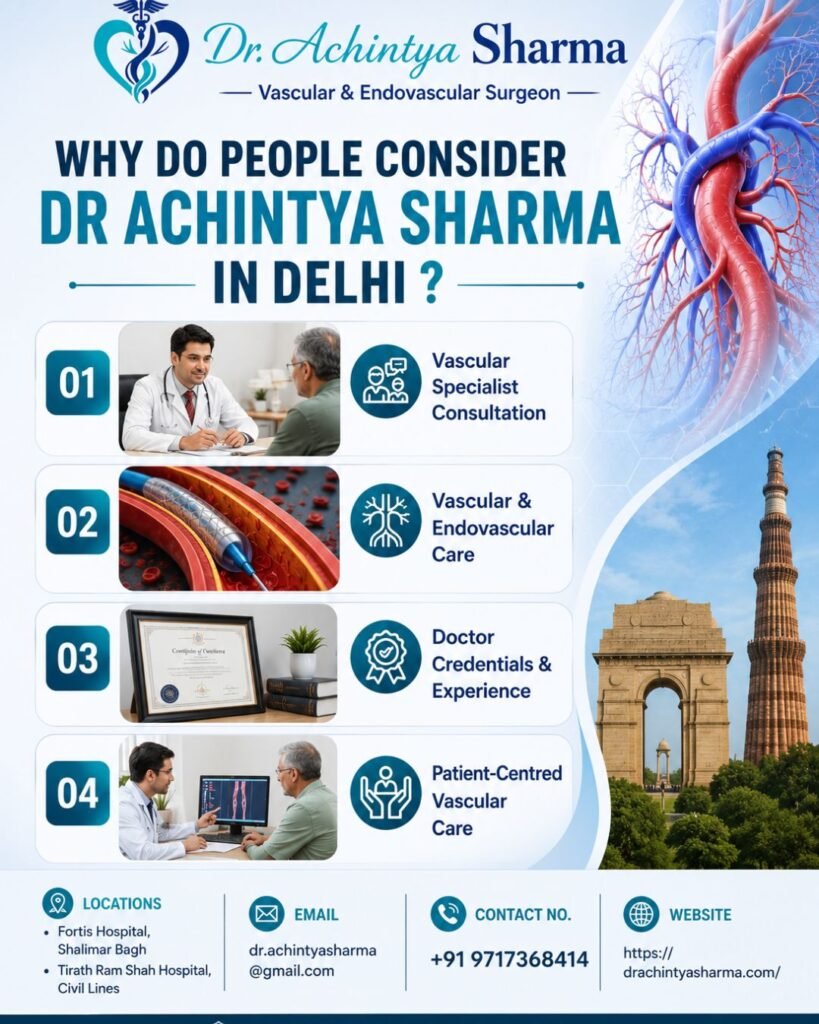
Why Do People Consider Dr. Achintya Sharma in Delhi?
Patients researching vascular care may consider Dr. Achintya Sharma when looking for information about vascular and endovascular evaluation in Delhi. When assessing any individual specialist, patients should review relevant qualifications, clinical experience, available treatment approaches, consultation process, and follow-up arrangements.
The decision should ultimately be based on the patient’s specific vascular condition and discussion with a qualified medical professional.
Best Practices for Better Vascular Care
Before your appointment:
- Take previous scans, blood-test reports, and medical records.
- Prepare a list of current medicines and supplements.
- Note when symptoms started and whether they are getting worse.
- Record symptoms such as leg swelling, pain while walking, skin changes, or wounds.
- Mention important conditions such as diabetes, hypertension, high cholesterol, or previous vascular disease.
- Ask why a particular investigation or treatment is being recommended.
- Discuss alternatives, potential risks, recovery, and follow-up.
Frequently Asked Questions
1. What conditions does a vascular surgeon treat?
A vascular surgeon may evaluate conditions affecting arteries and veins, including varicose veins, peripheral artery disease, artery blockage, aneurysms, diabetic vascular complications, and certain vascular emergencies. The exact scope of treatment depends on the surgeon’s expertise and the patient’s diagnosis.
2. Is a vascular surgeon different from a cardiologist?
Yes. Vascular surgeons primarily focus on blood-vessel disorders outside the heart and brain, while cardiologists specialize in heart and cardiovascular conditions. Some patients may need care from both specialties depending on their medical condition.
3. What is the difference between a vascular surgeon and a vascular specialist?
The terminology can vary by healthcare setting. A vascular surgeon is a doctor specifically trained to manage vascular conditions and perform vascular procedures. “Vascular specialist” is a broader term that may refer to a doctor with expertise in vascular disease.
4. When should varicose veins be evaluated?
Varicose veins should be medically assessed when they cause persistent pain, swelling, skin changes, heaviness, bleeding, ulcers, or other troublesome symptoms. A specialist can determine whether conservative care or a procedure is appropriate.
5. What are common signs of peripheral artery disease?
Possible symptoms include leg pain or cramping during walking that improves with rest, reduced exercise tolerance, changes in skin temperature or color, and wounds that heal slowly. Symptoms can vary, so proper medical assessment is important.
6. Can vascular problems be treated without surgery?
Some vascular conditions can be managed with medication, lifestyle changes, compression therapy where appropriate, or other non-surgical approaches. Other conditions may require endovascular treatment or surgery. Treatment depends on the diagnosis and individual clinical findings.
7. What should I take to a vascular consultation?
Bring previous medical reports, imaging scans, medication details, relevant blood-test results, and information about your symptoms. A short timeline describing when symptoms started and what makes them better or worse can also help the consultation.
8. Is vascular treatment in Delhi available for minimally invasive procedures?
Selected vascular conditions can be treated using minimally invasive endovascular procedures. Whether such treatment is suitable depends on the location and severity of the vascular problem, anatomy, medical history, and overall health.
Conclusion
Choosing the right Vascular Surgeon in Delhi is an important decision that should go beyond online ratings or treatment costs. Consider the specialist’s experience, diagnostic capabilities, treatment options, communication, and follow-up care before making your choice. Understanding your condition and discussing suitable treatment options with a qualified vascular professional can help you make a more informed decision.If you are exploring vascular care in Delhi, take time to compare your options and choose a specialist based on your individual needs. Visit Us to learn more about available vascular and endovascular services, or Contact Us to discuss your concerns and take the next step toward appropriate care.