Table of Contents
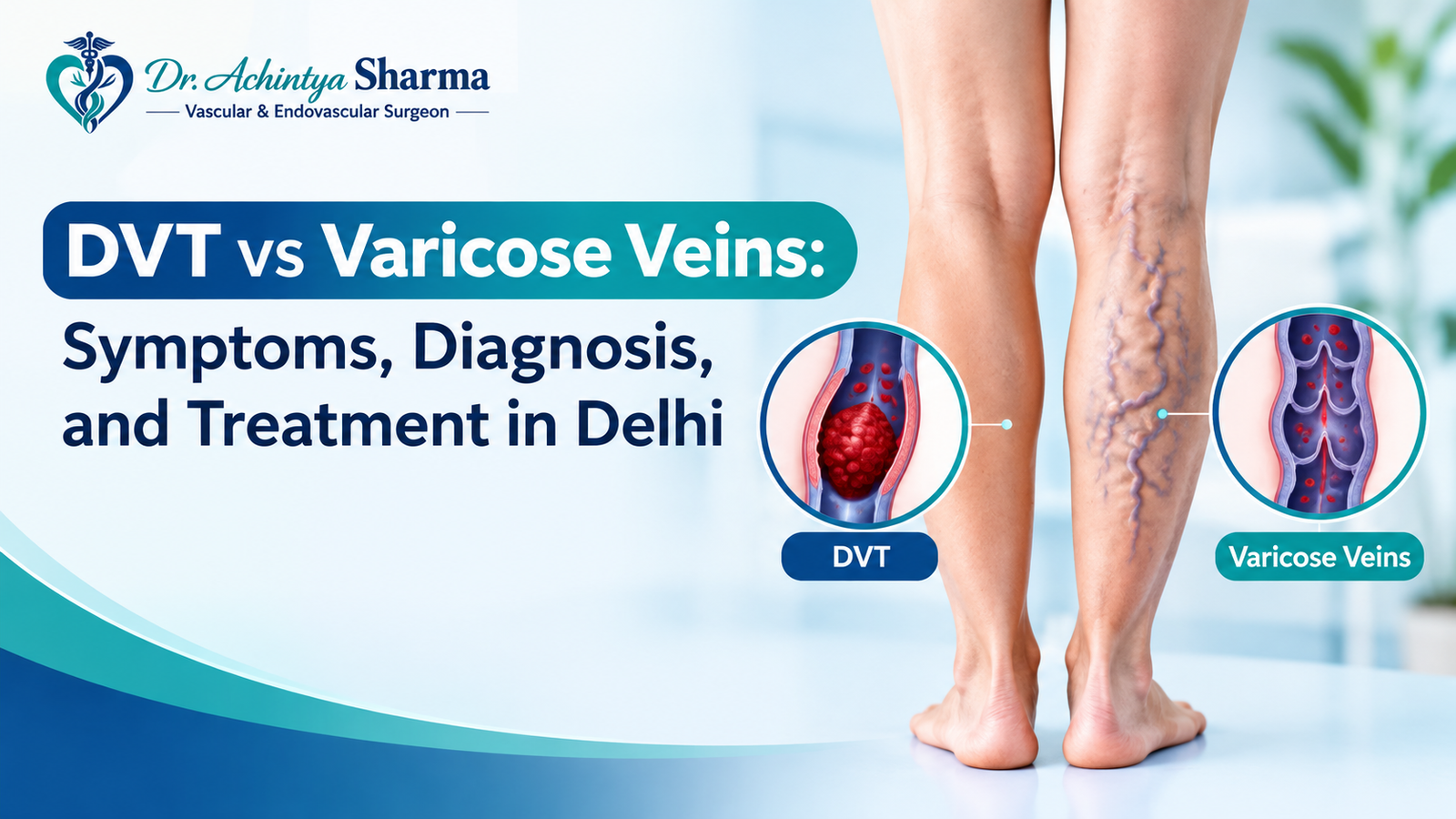
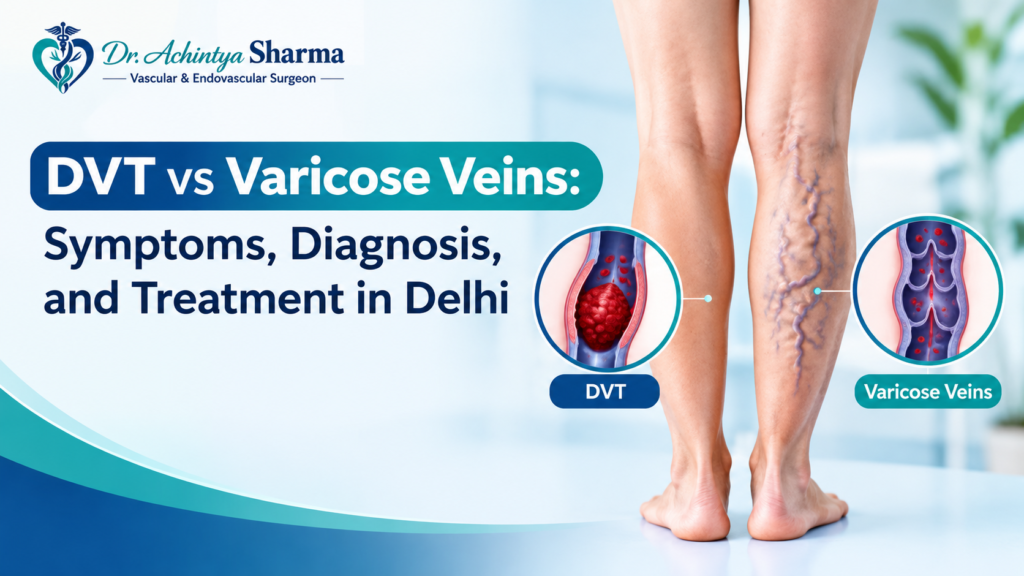
DVT vs Varicose is an important comparison for anyone experiencing leg pain, swelling, or visible veins. Although both conditions affect the venous system, their causes, symptoms, and potential complications are different. Deep vein thrombosis (DVT) occurs when a blood clot forms in a deep vein, whereas varicose veins develop when superficial veins become enlarged and twisted. Understanding DVT vs Varicose Veins can help people recognise warning signs and seek appropriate medical attention. In Delhi, knowing when to seek urgent care is especially important because untreated DVT can lead to serious complications.
Quick Answers: DVT vs Varicose Veins
| Feature | DVT | Varicose Veins |
| Main problem | Blood clot in a deep vein | Enlarged superficial veins |
| Common symptoms | Leg swelling, pain, warmth, and redness | Visible twisted veins, heaviness, and aching |
| Urgency | Suspected DVT needs urgent medical assessment | Usually non-emergency unless complications develop |
| Diagnosis | Clinical assessment, ultrasound, and sometimes D-dimer testing | Clinical examination and duplex ultrasound when indicated |
| Treatment | Anticoagulants and selected additional interventions | Compression for symptom relief and vein procedures when appropriate |
| Cost factors | Tests, medicines, severity, and hospital charges | Ultrasound, treatment technique, and affected veins |
| Follow-up | Monitoring clot treatment and medication safety | Monitoring symptoms, skin changes, and recurrence |
Why Is Understanding DVT vs Varicose Veins Important?
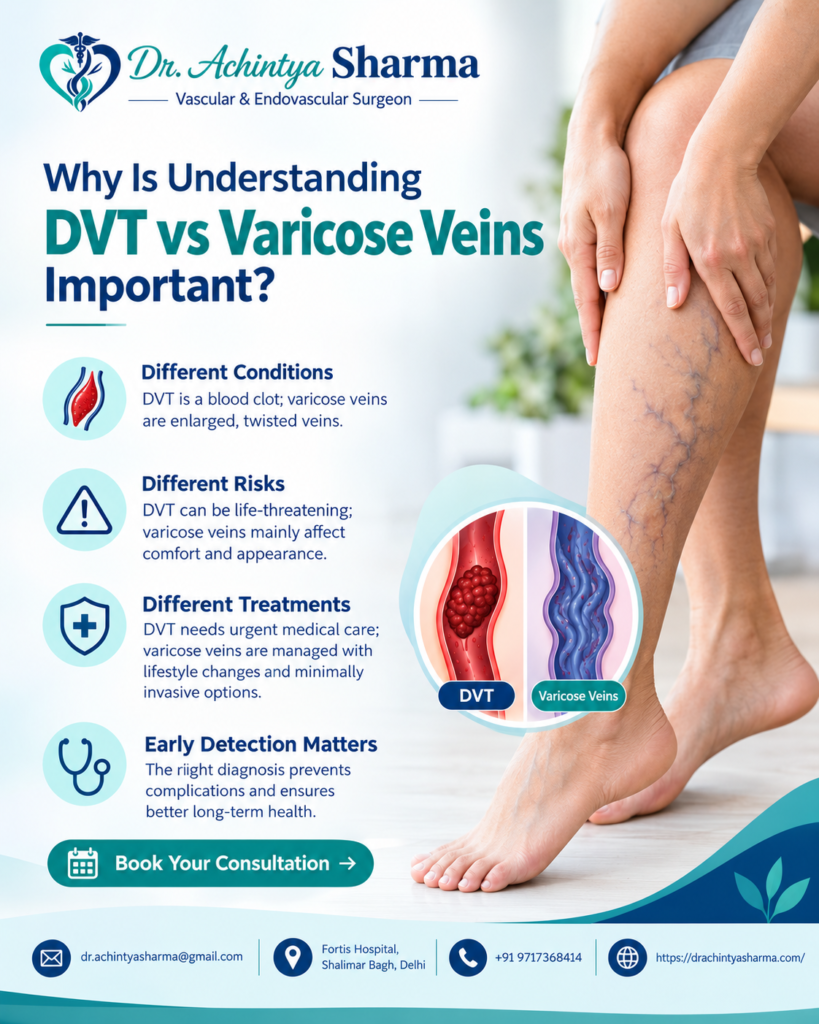
Understanding DVT vs Varicose Veins helps people distinguish between a potentially dangerous blood clot and a condition involving enlarged surface veins. Both may cause leg discomfort, but their medical implications are different.
Deep vein thrombosis develops when a clot forms in a deep vein, commonly in the leg. If part of the clot travels to the lungs, it can cause a pulmonary embolism, a serious and potentially life-threatening emergency.
Varicose veins usually develop when vein valves do not function properly, allowing blood to collect in superficial veins. This can lead to visible twisted veins, leg heaviness, swelling, skin changes, and, in advanced cases, venous ulcers.
Recognising the differences allows patients to seek the right assessment instead of assuming that every swollen or painful leg has the same cause.
Who Should Consider Medical Assessment?
People experiencing unexplained leg swelling, persistent calf pain, or unusual changes in their veins should consider medical evaluation. Certain factors, including recent surgery, prolonged immobility, long-distance travel, previous blood clots, and some medical conditions, can increase the risk of DVT. Dr Achintya Sharma, a Vascular and Endovascular Surgeon in Delhi, can help patients understand their vascular health concerns and explore appropriate evaluation and treatment options.
People with visible twisted veins, recurring ankle swelling, itching, or leg heaviness may need an assessment for varicose veins or chronic venous insufficiency.
Important: New swelling or pain in one leg, particularly with warmth or redness, requires urgent medical assessment to rule out DVT. Sudden breathlessness, chest pain, coughing up blood, or fainting may indicate pulmonary embolism and require emergency medical care.
Top Differences Between DVT and Varicose Veins
1. DVT Symptoms
Deep Vein Thrombosis symptoms can include swelling in one leg, calf tenderness, pain, warmth, and skin redness or discoloration. Some people experience few symptoms or none at all.
Risk factors include prolonged immobility, recent surgery, previous DVT, certain cancers, and other medical or hormonal factors.
When comparing DVT vs Varicose Veins, it is important to remember that a blood clot may develop without prominent visible veins. Symptoms alone cannot confirm or exclude DVT, so prompt medical assessment is essential when a clot is suspected.
2. Varicose Vein Symptoms
Varicose veins typically appear as enlarged, twisted blue or purple veins beneath the skin. Common symptoms include aching, itching, leg heaviness, and swelling around the ankles, especially after standing for extended periods.
Some people develop skin discoloration, inflammation, bleeding, or venous ulcers when the condition becomes more advanced.
Unlike DVT, varicose veins usually develop gradually. However, the two conditions can coexist, so the presence of visible veins does not rule out a deep vein clot.
How to Identify DVT vs Varicose Veins
Visible twisted veins are characteristic of varicose veins, while sudden, unexplained leg swelling, warmth, and pain may raise concern about DVT. Nevertheless, symptoms can overlap, and appearance alone cannot establish a diagnosis.
A healthcare professional may recommend duplex ultrasound to assess blood flow and check for a clot. A D-dimer blood test may also be appropriate, depending on the clinical assessment and likelihood of DVT.
Accurate diagnosis is important because treatment for a blood clot differs from treatment for superficial venous disease.
How Do Treatments Compare?
Treatment for DVT focuses on preventing the clot from growing, reducing the risk of further clots, and avoiding complications. Anticoagulant medicines are commonly prescribed, while selected patients may need additional interventions.
Varicose vein management depends on symptoms, vein anatomy, and ultrasound findings. Options may include lifestyle changes, clinician-recommended compression, endovenous ablation, sclerotherapy, or surgery in selected cases.
| Treatment aspect | DVT | Varicose Veins |
| Primary objective | Prevent clot progression and complications | Relieve symptoms and manage affected veins |
| Common treatments | Anticoagulant medication | Compression and selected vein procedures |
| Follow-up | Medication monitoring and clot management | Symptom monitoring and assessment for recurrence |
| Potential complications | Pulmonary embolism and other clot-related problems | Bleeding, skin changes, and venous ulcers |
When considering DVT vs Varicose Veins, treatment should always follow a confirmed or appropriately assessed diagnosis. Compression therapy does not replace urgent evaluation for suspected DVT, and patients should not start anticoagulants without medical guidance.
Why Consider Dr. Achintya Sharma in Delhi?
People looking for DVT Treatment in Delhi or Varicose Vein Treatment in Delhi can review relevant service information before arranging a consultation. A qualified vascular specialist can evaluate symptoms, medical history, risk factors, and imaging results to help determine the appropriate course of care.
Explore these resources:
- Deep Vein Thrombosis Treatment in Delhi
- Varicose Vein Treatment in Delhi
Reviewing treatment information can help patients understand available options and prepare relevant questions for their consultation.
Best Practices for Better Results
The following steps can help people manage venous health and recognise potential complications:
- Seek timely medical care: Do not ignore unexplained swelling, warmth, or pain in one leg.
- Share your medical history: Inform your clinician about previous clots, surgery, prolonged travel, immobility, and relevant medications.
- Avoid self-diagnosis: Photographs and visible veins cannot reliably confirm or exclude DVT.
- Follow your treatment plan: Stick to your doctor’s recommendations and attend scheduled follow-up visits.
- Manage varicose vein symptoms: Discuss walking, leg elevation, compression, and appropriate procedures with your clinician.
- Understand your risk factors: Ask about suitable prevention measures if you have a history of blood clots or prolonged immobility.
These practices support informed decisions, but they cannot replace individual medical evaluation.
Frequently Asked Questions
1. Is DVT more dangerous than varicose veins?
DVT is generally more immediately dangerous because a clot can travel to the lungs and cause pulmonary embolism. Varicose veins are often less urgent, although they can lead to bleeding, skin changes, and ulcers. Both conditions require appropriate medical attention based on their symptoms and complications.
2. Can you have DVT without visible swollen veins?
Yes. DVT can occur without prominent surface veins or obvious swelling. Some people experience mild symptoms or none at all. Unexplained leg pain, tenderness, warmth, or swelling should prompt medical assessment rather than relying on the appearance of the leg.
3. Does calf pain always mean DVT?
No. Calf pain can result from muscle strain, injury, superficial vein inflammation, or other conditions. However, new calf pain accompanied by swelling, warmth, or redness can indicate DVT. A healthcare professional can assess the risk and determine whether ultrasound or other testing is necessary.
4. Can varicose veins disappear without treatment?
Established varicose veins generally do not disappear permanently on their own. Walking, leg elevation, and clinician-recommended compression may help relieve symptoms, but they do not eliminate the underlying vein problem. Selected patients may benefit from procedures such as endovenous ablation or sclerotherapy.
5. How is DVT treated in Delhi?
DVT treatment depends on clot location, severity, and individual risk factors. Anticoagulants are commonly prescribed to prevent the clot from growing and reduce the risk of further clots. Some patients may require additional interventions. Suspected DVT needs urgent medical assessment before treatment decisions are made.
6. What is the cost of varicose vein treatment in Delhi?
The cost depends on the diagnostic tests required, the number and location of affected veins, the treatment technique, hospital charges, and follow-up needs. A clinical assessment and appropriate ultrasound can help establish a treatment plan and provide a more reliable estimate of the expected expenses.
7. Can walking prevent DVT and varicose veins?
Regular walking supports circulation and helps reduce prolonged immobility, which is a risk factor for DVT. However, walking cannot guarantee the prevention of blood clots or reverse established varicose veins. People with additional risk factors should discuss suitable prevention measures with their healthcare professional.
8. Which doctor should I consult for DVT or varicose veins in Delhi?
A vascular surgeon or another appropriately qualified clinician can assess suspected venous disease. Suspected DVT requires urgent evaluation, while persistent varicose vein symptoms can be assessed through a planned consultation. Treatment recommendations depend on the diagnosis, symptoms, and individual clinical circumstances.
Conclusion
Understanding DVT vs Varicose Veins helps people recognise the differences between a potentially dangerous blood clot and enlarged superficial veins. Although symptoms can overlap, suspected DVT requires urgent medical assessment, while varicose veins may require ongoing management or a procedure. If you are experiencing leg pain, swelling, or visible veins, seek appropriate medical advice. To learn more about vascular assessment and available treatment options, contact the clinic to enquire about a consultation.