
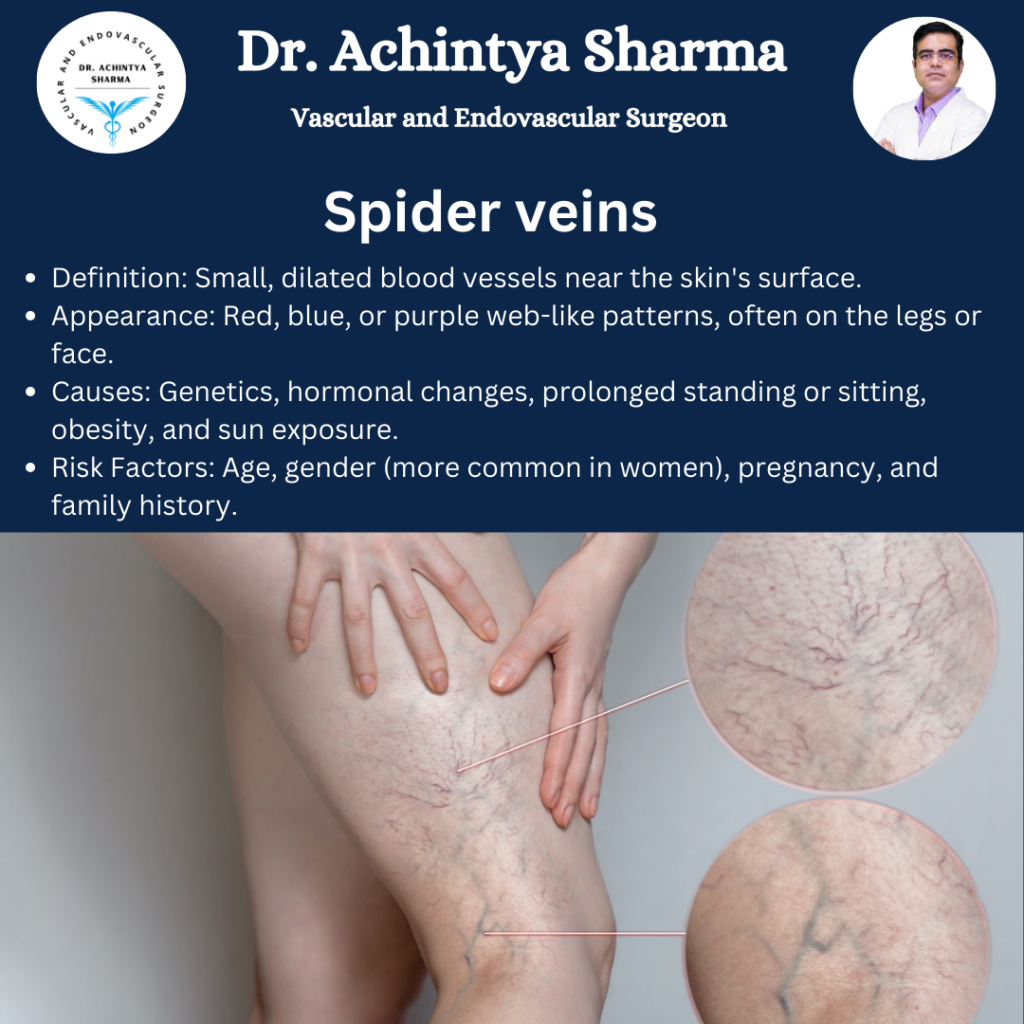
Spider veins on legs, also known as telangiectasias, are small, dilated blood vessels that appear close to the skin’s surface. They are most commonly found on the legs and face. These veins are red, blue, or purple and often form a web-like pattern, hence the name “spider veins on legs.” Although spider veins on legs are usually harmless, they can cause discomfort and maybe a cosmetic concern for many individuals.
Causes of Spider Veins on Legs
Several factors can contribute to the development of spider veins on legs:
- Genetics: A family history of spider veins on legs or varicose veins increases the likelihood of developing these conditions.
- Age: As we age, our veins can weaken, making it easier for blood to pool and veins to dilate, leading to spider veins on our legs.
- Hormonal Changes: Hormonal fluctuations during puberty, pregnancy, menopause, can increase the risk of spider veins on the legs.
- Prolonged Standing or Sitting : Long periods of standing or sitting can lead to poor blood circulation, contributing to spider veins on the legs.
- Obesity: Excess weight puts additional pressure on veins, making them more susceptible to becoming spider veins on legs.
- Sun Exposure: Extended exposure to the sun can cause spider veins on the legs, particularly on the face.
Symptoms of Spider Veins on Legs
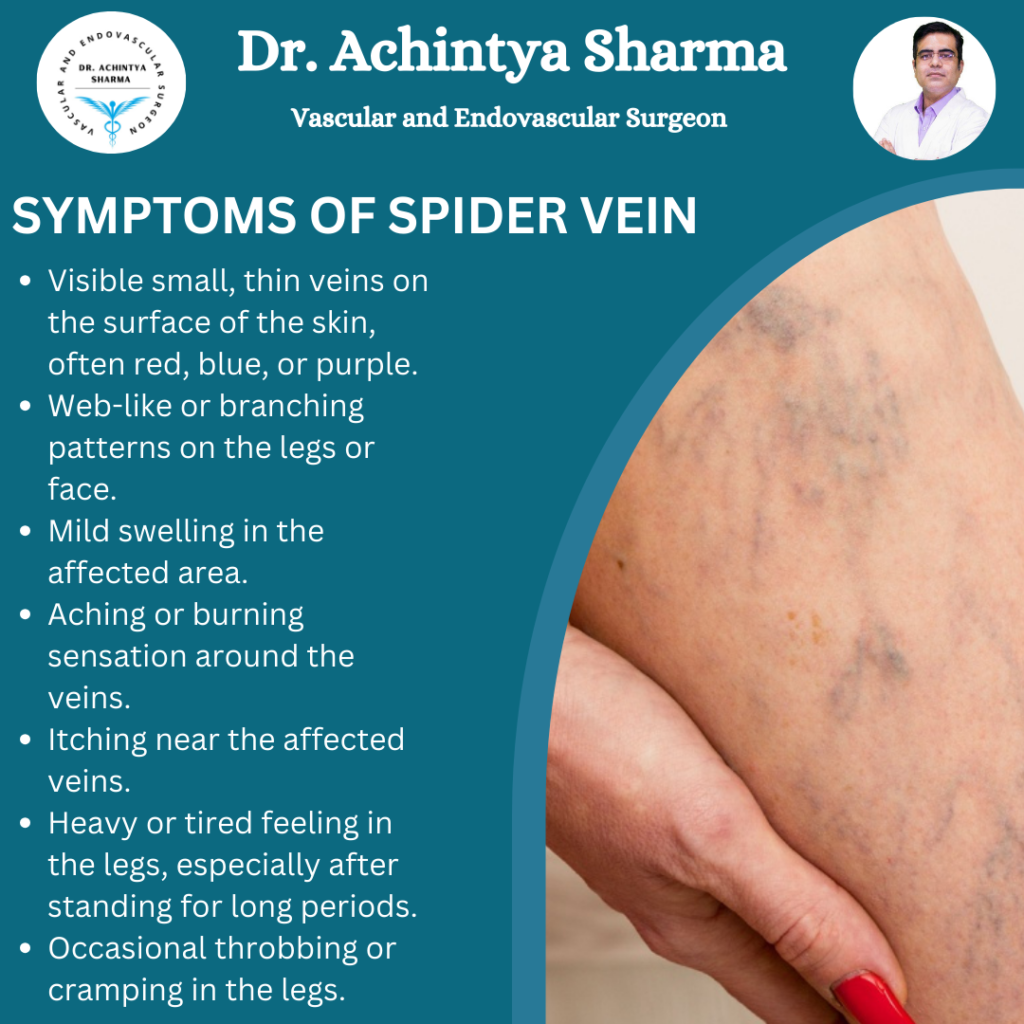
Spider veins on legs are primarily a cosmetic concern, but they can sometimes cause symptoms such as:
- Aching or pain in the legs
- Throbbing or cramping
- Swelling in the legs
- Itching around the affected veins
- Heaviness in the legs
These symptoms can worsen after long periods of standing or sitting.
Prevention and Management of Spider Veins on Legs
While it may not be possible to prevent spider veins on leg entirely, certain lifestyle changes and management strategies can reduce the risk or alleviate symptoms:
- Exercise Regularly: Physical activity improves circulation and helps maintain a healthy weight, reducing pressure on your veins and preventing spider veins on your legs.
- Maintain a Healthy Weight: Managing your weight can prevent excess pressure on your leg veins and reduce the risk of spider veins on your legs.
- Elevate Your Legs: Elevating your legs when resting can help improve circulation and reduce pressure on your veins, helping to prevent spider veins on your legs
- Avoid Prolonged Sitting or Standing: Take breaks to move around if you need to sit or stand for extended periods, reducing the risk of spider veins on your legs.
- Wear Compression Stockings: These stockings can help improve blood flow in the legs and reduce the risk of spider veins on legs.
- Protect Your Skin from the Sun: Use sunscreen and wear protective clothing to minimize sun damage.
Treatment Options for Spider Veins on Legs
If spider veins on your legs are causing discomfort or affecting your confidence, various treatment options are available:
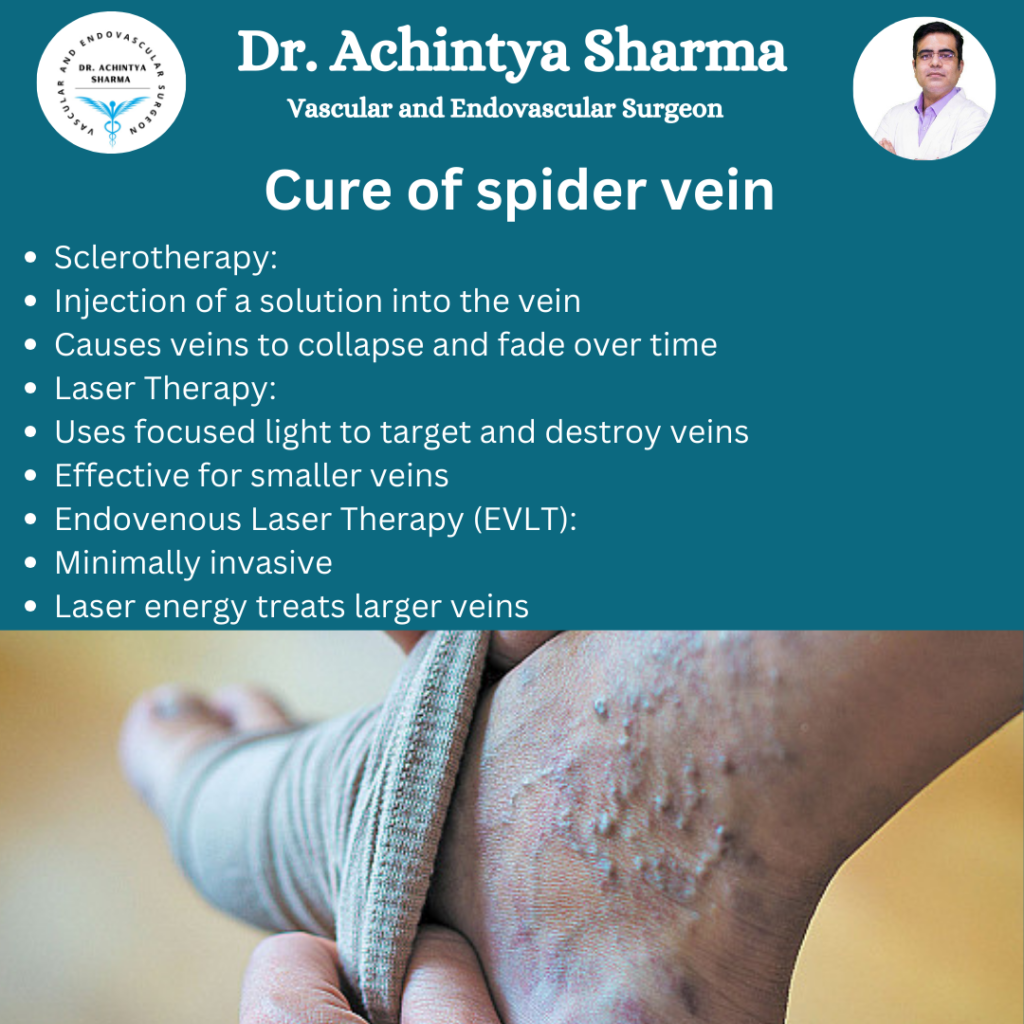
- Sclerotherapy: This is the most common treatment for spider veins on the legs. It involves injecting a solution directly into the vein, causing it to collapse and fade over time.
- Laser Therapy: Laser treatment uses focused light to target and destroy the affected veins. This method is often used for smaller veins and those located on the face.
- Endovenous Laser Therapy (EVLT): EVLT is a minimally invasive procedure that uses laser energy to treat larger veins, often in combination with sclerotherapy, to address spider veins on leg.
- Radiofrequency Ablation: This technique uses radiofrequency energy to heat and collapse the vein, which is then absorbed by the body, helping to treat spider veins on the legs.
- Surgery: In severe cases, surgical options such as vein stripping or ligation may be considered to remove spider veins on the legs.
Living with Spider Veins on Legs
While spider veins on legs are usually not a serious medical condition, they can affect your quality of life. Here are some tips for managing the emotional and physical aspects of living with spider veins on leg:
- Self-Care: Incorporate self-care routines, such as moisturizing and gentle massage.
- Support Groups: Joining support groups or online communities can provide emotional support and share experiences with others facing similar challenges related to spider veins on their legs.
- Consult a Specialist: consult a vascular specialist or dermatologist to explore treatment options and get professional advice.
Conclusion
Spider veins on legs are a common condition that can cause discomfort and cosmetic concerns. Understanding the causes, symptoms, and available treatments can help you manage and reduce the impact of spider veins on your legs. By adopting preventive measures and exploring appropriate treatments, you can improve your vein health and overall well-being. Remember, while spider veins on legs are often harmless, seeking professional advice is crucial for personalized care and effective management.