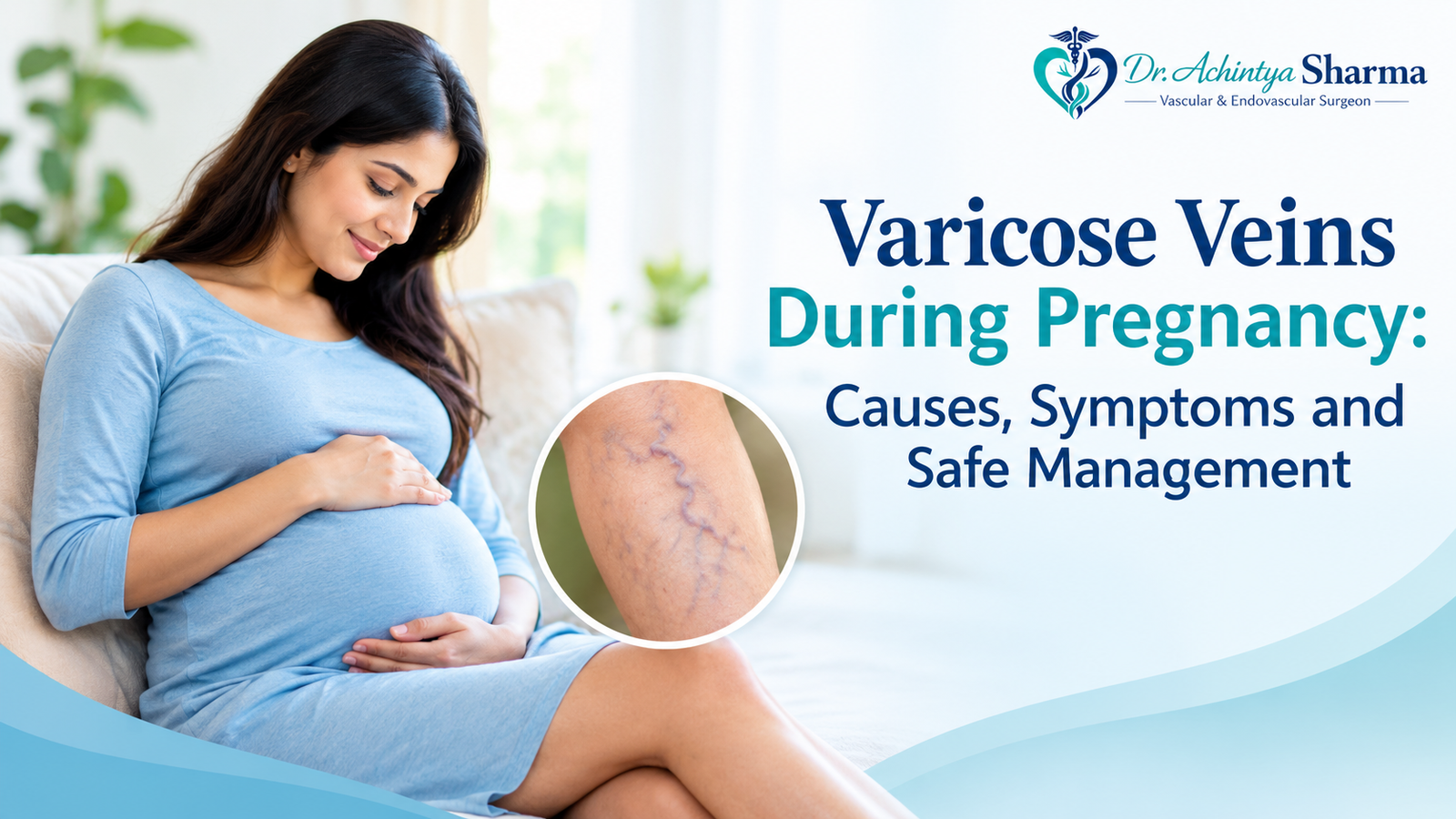
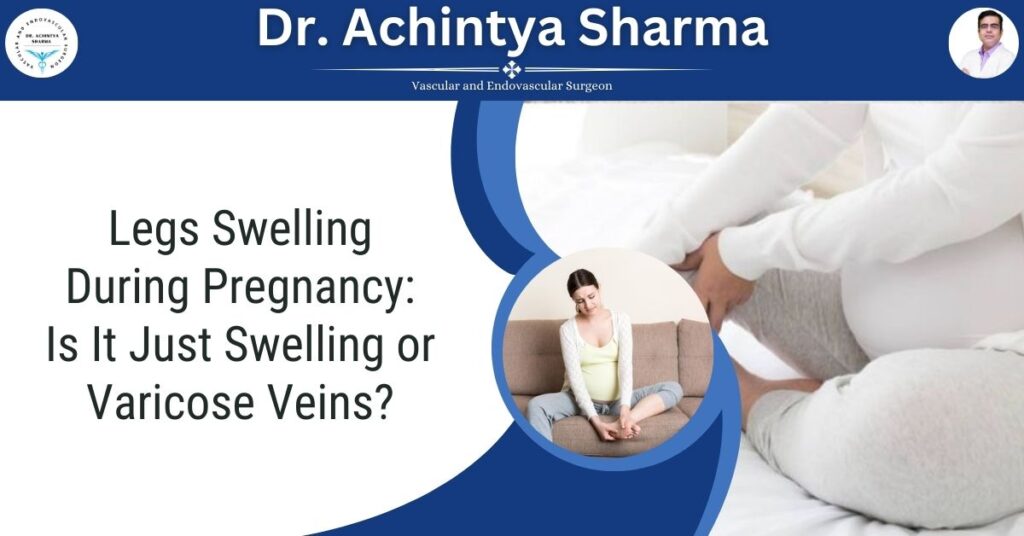
Pregnancy is a beautiful journey, but it’s not without its challenges. One of the most common concerns for expecting mothers is legs swelling during pregnancy. In fact, nearly 50% of pregnant women experience swelling in their legs and feet, especially during the third trimester. While this swelling is often just your body’s way of adjusting to the growing baby, it can sometimes be a sign of something more—like varicose veins. So, how do you tell the difference? Is it just normal pregnancy swelling, or could it be a vein issue that needs attention? Let’s dive into the connection between legs swelling during pregnancy and varicose veins, and find out when it’s time to consult experts like Dr. Achintya Sharma.
Pregnancy Swelling vs. Varicose Veins: Know the Difference?
1. Pregnancy Swelling (Edema)
- What It Is: Temporary fluid retention, often in the legs and feet.
- Why It Happens:
- Increased blood volume to support your baby.
- Pressure from the growing uterus on pelvic veins.
- Hormones causing blood vessels to relax and retain fluid.
- Key Feature: Swelling usually improves with rest or elevation and is not permanent.
2. Varicose Veins
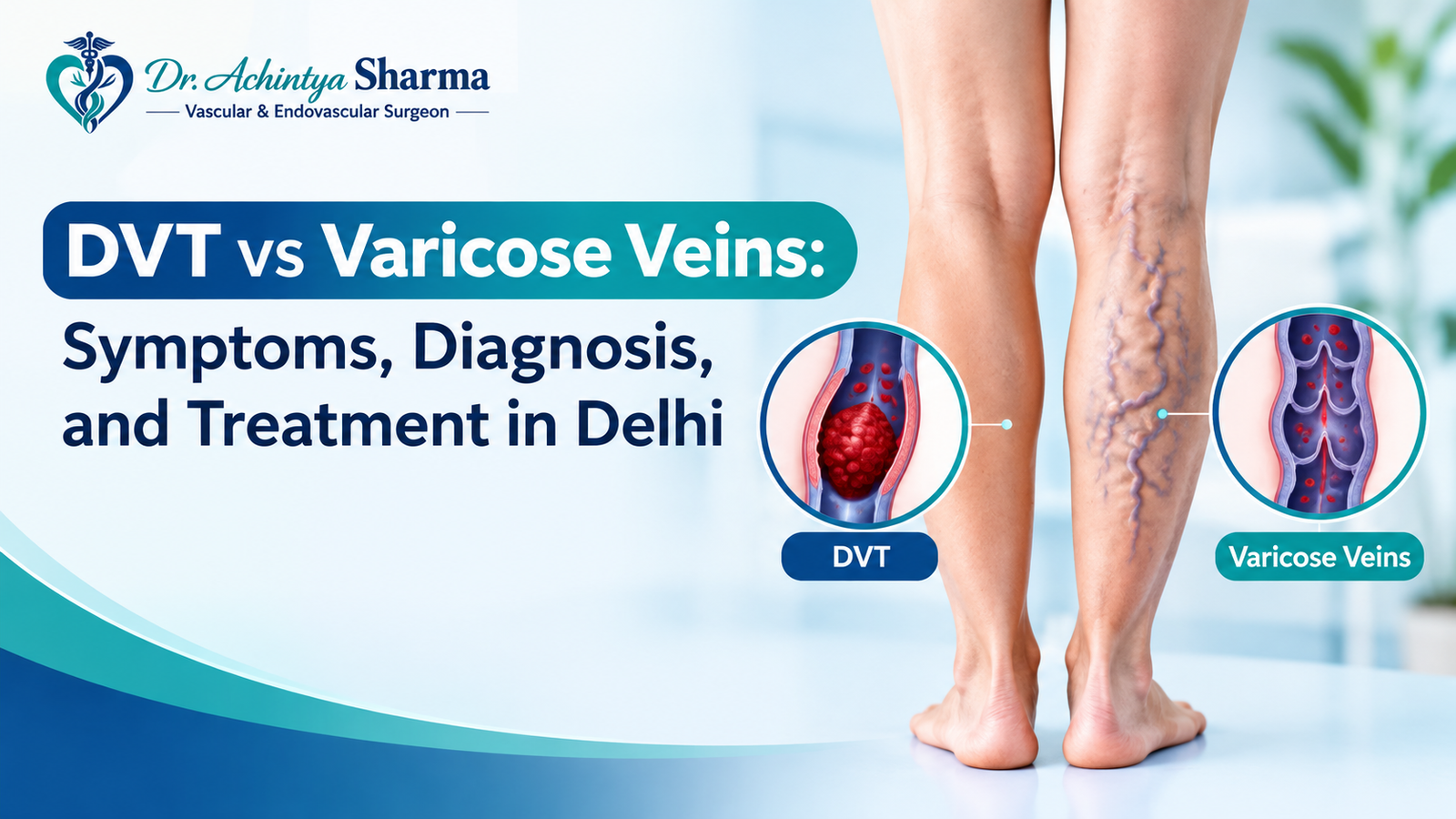
- What It Is: Enlarged, twisted veins that bulge under the skin, often on the legs.
- Why It Happens:
- Swelling increases pressure on veins, weakening their valves.
- Blood pools in the veins, causing them to stretch and twist.
- Key Feature: Varicose veins are visible (bulging, blue/purple veins) and may cause aching, heaviness, or itching.
Symptoms Showing You Might Have Varicose Veins
How do you know if your legs swelling during pregnancy is a sign of varicose veins? Look out for these symptoms:
- Visible Veins: Bulging, rope-like veins that are blue or purple in color.
- Aching or Heaviness: A persistent feeling of heaviness, cramping, or discomfort in your legs.
- Itching or Discomfort: The skin around the veins may feel itchy, tender, or irritated.
- Worsening Swelling: Swelling that doesn’t improve with rest or elevation.
If you notice any of these signs, it’s time to take proactive steps.
5 Easy Ways to Reduce Swelling and Avoid Varicose Veins During Pregnancy
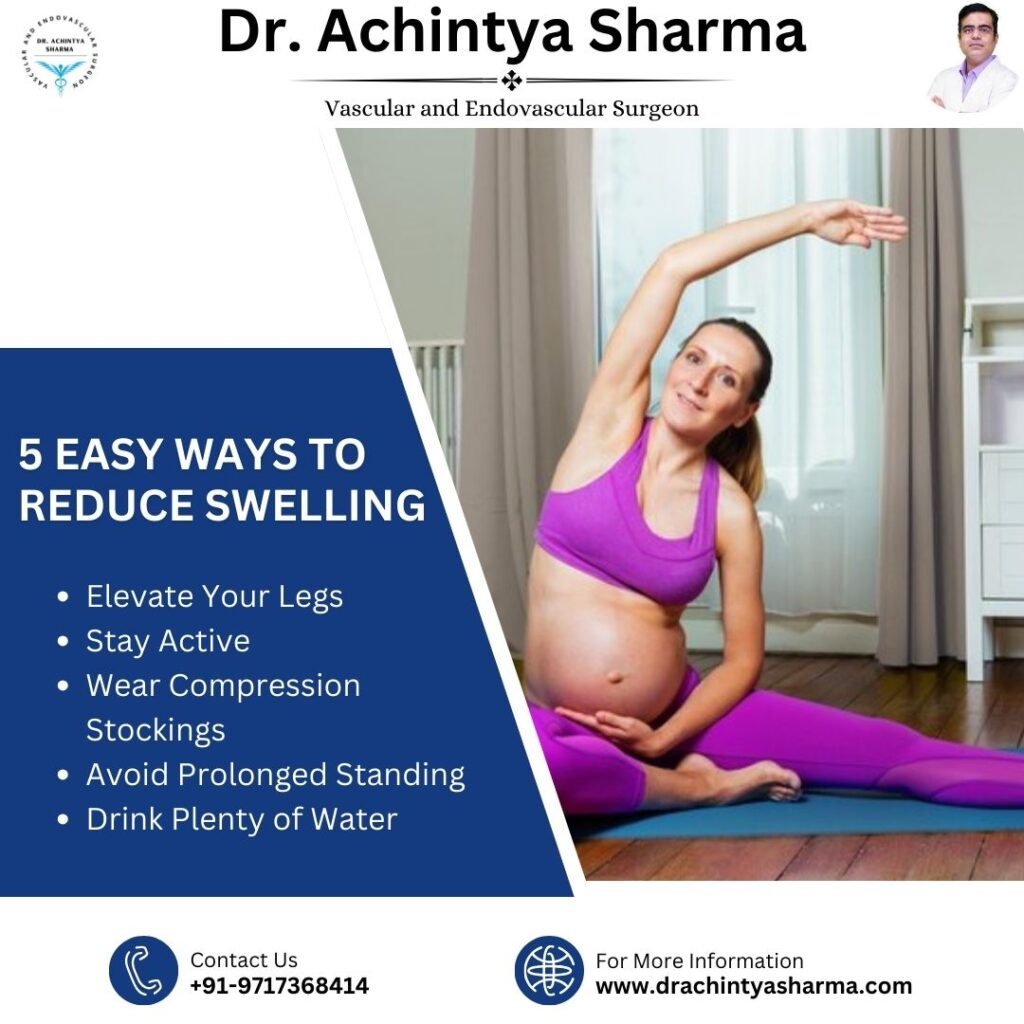
The good news? There are steps you can take to manage legs swelling during pregnancy and reduce the risk of varicose veins:
- Elevate Your Legs: Raise your legs on a pillow for 15-20 minutes daily to encourage better blood flow.
- Stay Active: Gentle exercises like walking or prenatal yoga can improve circulation.
- Wear Compression Stockings: These can help reduce swelling and provide support to your veins.
- Avoid Prolonged Standing: Take regular breaks to sit and rest if you’re on your feet for long periods.
- Drink Plenty of Water: Staying hydrated helps your body flush out excess fluids.
When to Consult
If your swelling is persistent, painful, or accompanied by visible veins, it’s best to seek professional advice. Dr. Achintya Sharma, a leading expert in vascular health, can provide personalized care and treatment options to address varicose veins and ensure a healthier pregnancy journey.
Conclusion:
Legs swelling during pregnancy might seem like just another pregnancy symptom, but it’s important to stay vigilant. If your swelling is accompanied by visible veins or discomfort, it could be a sign of varicose veins.
Don’t wait for the problem to worsen—reach out to experts like Dr. Achintya Sharma for guidance. Your health and comfort matter, so take the first step today and ensure a smoother, healthier pregnancy journey.