Do you often notice bulging, twisted veins on your legs that ache or feel heavy by the end of the day? You’re not alone. Millions struggle with varicose veins, a common yet often ignored condition. While many seek relief, confusion remains around which treatment works best: homeopathy, Ayurveda, or allopathy. Each promises results, but which truly delivers? In this blog, we explore these three popular approaches to help you make the best decision for your health.
What Are Varicose Veins?
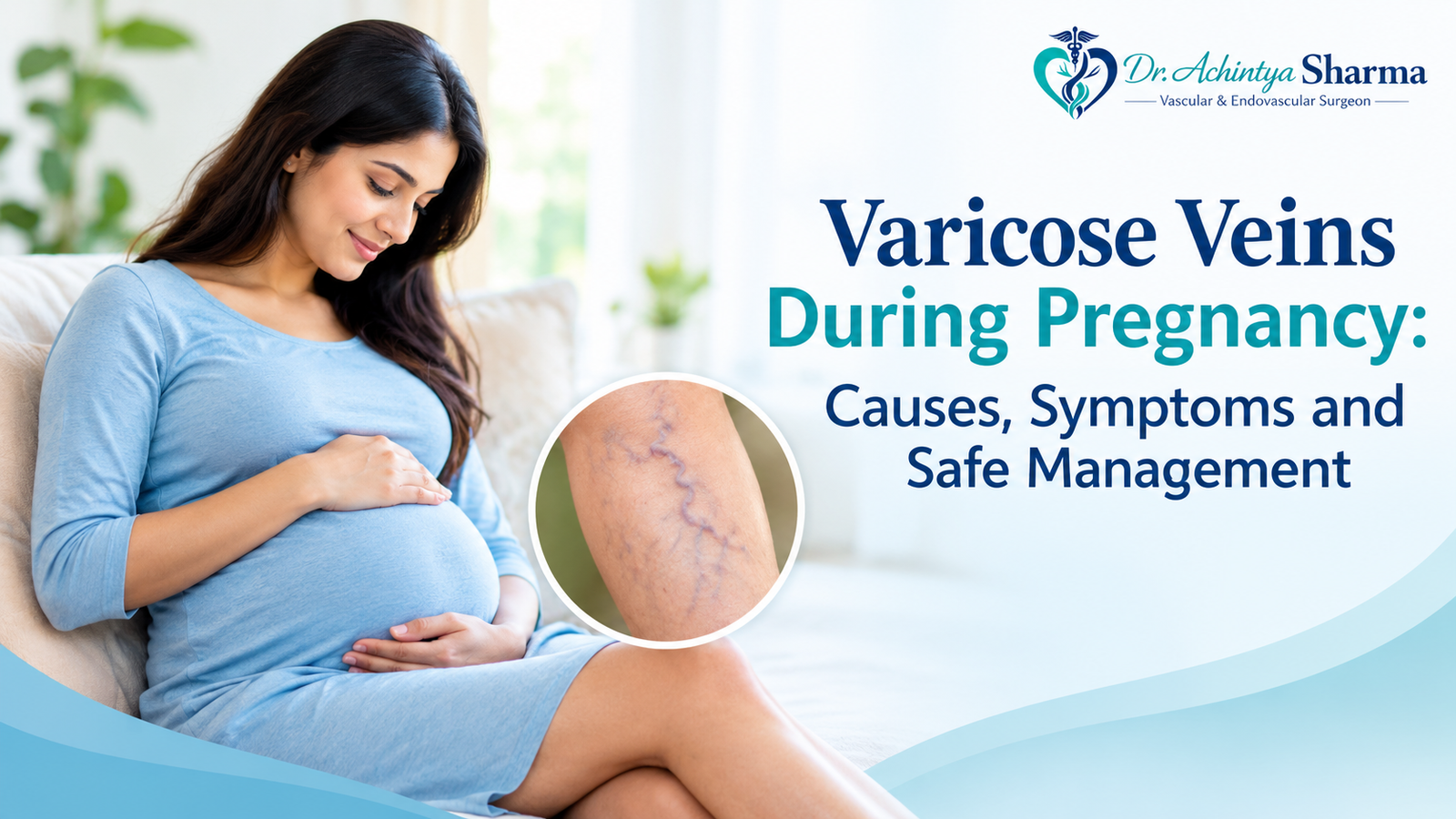
These are swollen, enlarged veins, usually appearing blue or dark purple. They often show up on the legs and feet due to standing or walking, which increases pressure in the veins. Some common symptoms include:
- Aching or heavy legs
- Swollen ankles
- Muscle cramping
- Itchy or discolored skin near the veins
These veins aren’t always serious, but if you ignore them for too long, they can lead to problems like skin sores or even blood clots.
Why Do People Explore Alternative Treatments?
Many people hesitate to opt for surgery or chemical-based treatments. That’s where homeopathy and Ayurveda come in. They’re natural, generally side-effect-free, and focus on treating the root cause. But can they really help with varicose veins? Let’s break down what each approach offers, the good and the not-so-good.
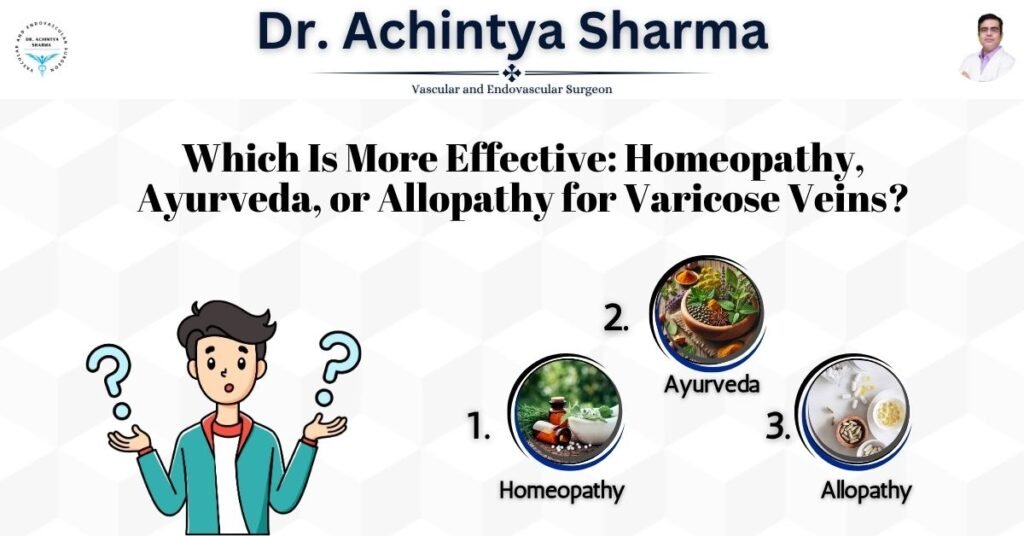
Comparing Homeopathy, Ayurveda, and Allopathy
1. Homeopathy for Varicose Veins
Homeopathy takes a “like cures like” approach. Remedies are prescribed based on symptoms, constitution, and mental state. Popular options include:
- Hamamelis – for pain and swelling
- Pulsatilla – for throbbing veins
- Calcarea Fluorica – to improve vein elasticity
Pros:
- Non-invasive
- Few side effects
- Can help manage pain and slow progression
Cons:
- Results vary
- Takes time
- Not backed by strong clinical evidence
2. Ayurveda for Varicose Veins
In Ayurveda, varicose veins are believed to be caused by an imbalance in the vata dosha, which affects blood flow and nerve function. Treatments focus on improving circulation and strengthening veins using:
- Herbal oils (like Sahacharadi oil)
- Panchakarma detox therapy
- Herbs like Guggulu, Ashwagandha, and Triphala
Pros:
- Holistic approach
- Improves blood flow and reduces inflammation
- Strengthens overall vein health
Cons:
- Requires lifestyle changes
- Takes commitment and time
- Limited emergency relief
According to Dr. Achintya Sharma, a trusted expert in Ayurveda, every treatment should be tailored to the individual, there’s no one-size-fits-all solution. “Ayurveda is not one-size-fits-all. Treatments should align with individual doshas and health history.”
3. Allopathy for Varicose Veins
Allopathy offers the most scientifically validated treatments, including:
- Compression stockings
- Laser therapy
- Sclerotherapy
- Surgery (in severe cases)
Pros:
- Fast relief
- High success rate
- Backed by clinical research
Cons:
- May cause side effects
- Can be expensive
- Focuses more on symptoms than causes
Allopathic treatments are effective for moderate to severe varicose veins. However, for long-term prevention, lifestyle changes are still essential.
Which Is the Best Treatment for You?
The right choice depends on your condition, preferences, and health goals.
- For mild varicose veins, Ayurveda or homeopathy may provide relief over time.
- For moderate to severe cases, allopathy is more effective, especially when immediate results are needed.
- Many experts, including Dr. Achintya Sharma, recommend an integrative approach combining the strengths of Ayurveda with the precision of allopathy for best results.
Before starting any treatment, always consult a specialist to evaluate your condition.
Conclusion
Varicose veins aren’t just about looks they can also affect your comfort and overall health. Left unchecked, they may lead to pain and complications. While homeopathy and Ayurveda offer natural paths to healing, they work best when used early or alongside conventional care. Allopathy, on the other hand, delivers quick and proven results for more serious cases. The key lies in understanding your needs and choosing what suits you best. As Dr. Achintya Sharma wisely advises, “Healing is personal. The best medicine is the one that works for you.” Listen to your body, consult a professional, and take action today toward healthier veins.